


November 18, 2025
News
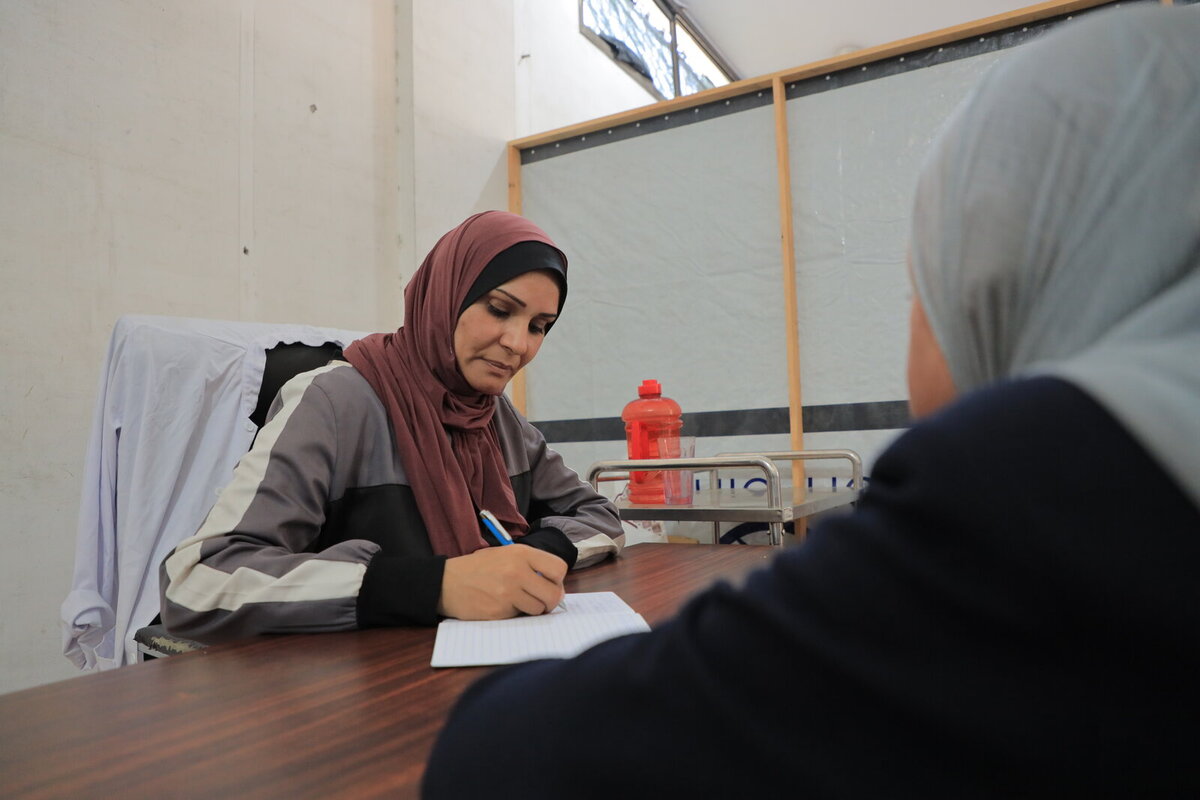
Although the recent ceasefire stopped the imminent danger in Gaza, the peace agreement itself cannot heal the wounds, allow people to return to their broken homes, nor chase away their recurring nightmares. Caritas Czech Republic, together with the financial support from the Ministry of Foreign Affairs of the Czech Republic, helped to maintain the operation of the clinic of Caritas Jerusalem. The facility provided people with basic healthcare and psychosocial support. This activity was concluded at the end of October, but our colleagues remain on site and continue providing assistance primarily in systematic psychosocial support and crisis intervention. The people of Gaza have gone through severe hardship and they need long-term, professionally-led help. The following story is one of many.
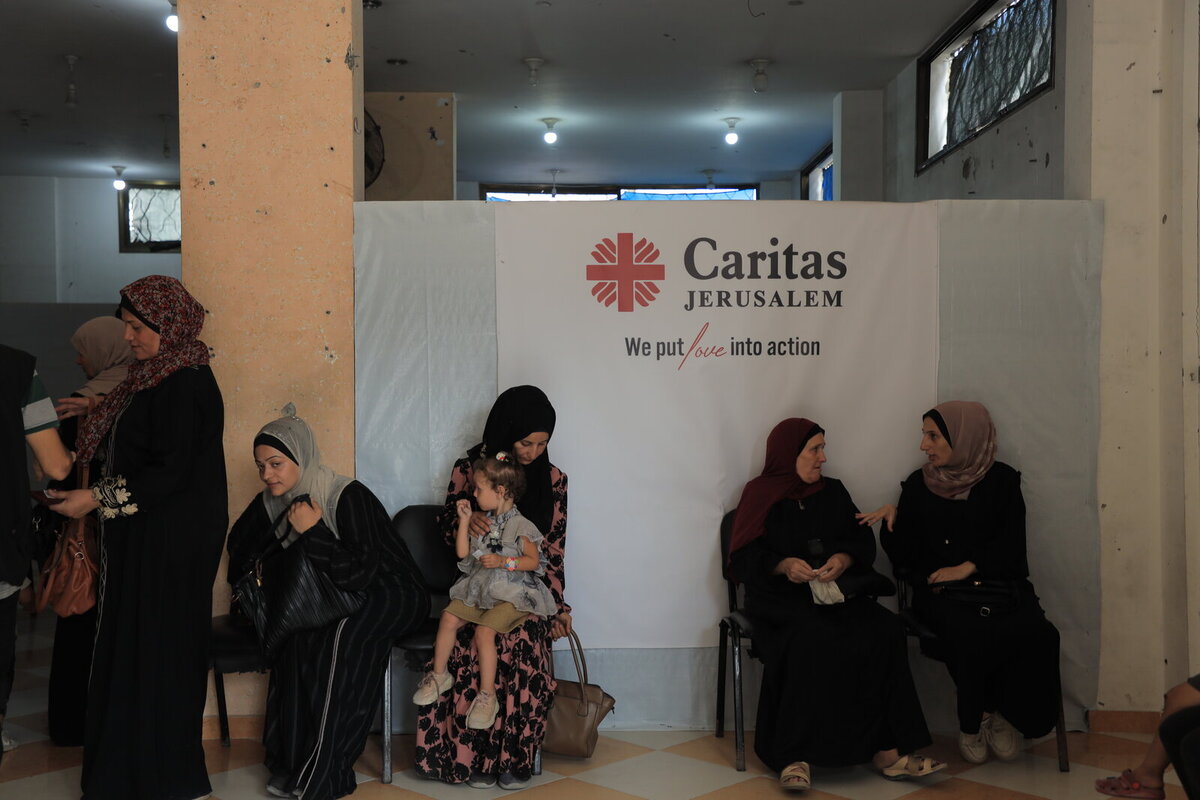
Foto: Women with children are waiting at the clinic of Caritas Jerusalem
Donate and help people in Gaza
Aida: From peaceful life to the whirlwind of conflict
Aida, now forty-one, came to Gaza as a young girl. She moved there from another Arabic country to finish her studies. Later, she got married and started a family. Despite the fact that her husband had epilepsy, they led a nice and content life. Moreover, they had a stable background: a multi-story house and a big family that stood by each other. Their five children – the oldest being 18 and the youngest only two and a half years old – grew up in an environment where everyday concerns were dealt with, not matters of survival. “We were a happy family,” Aida remembers.
Everything changed on October 7, 2023. As the bombing intensified, Aida quickly picked up her documents and a few personal items, then left the house together with her children. They went to her father’s place, located in a different part of town. Her husband and the rest of their family stayed in their house; they later relocated to the Al-Quds Hospital believing it to be a safe shelter. However, by that time, there was nowhere safe in the city. The hospital was surrounded and shelled by Israeli troops. Some people inside were arrested, some were forced to leave and head south.
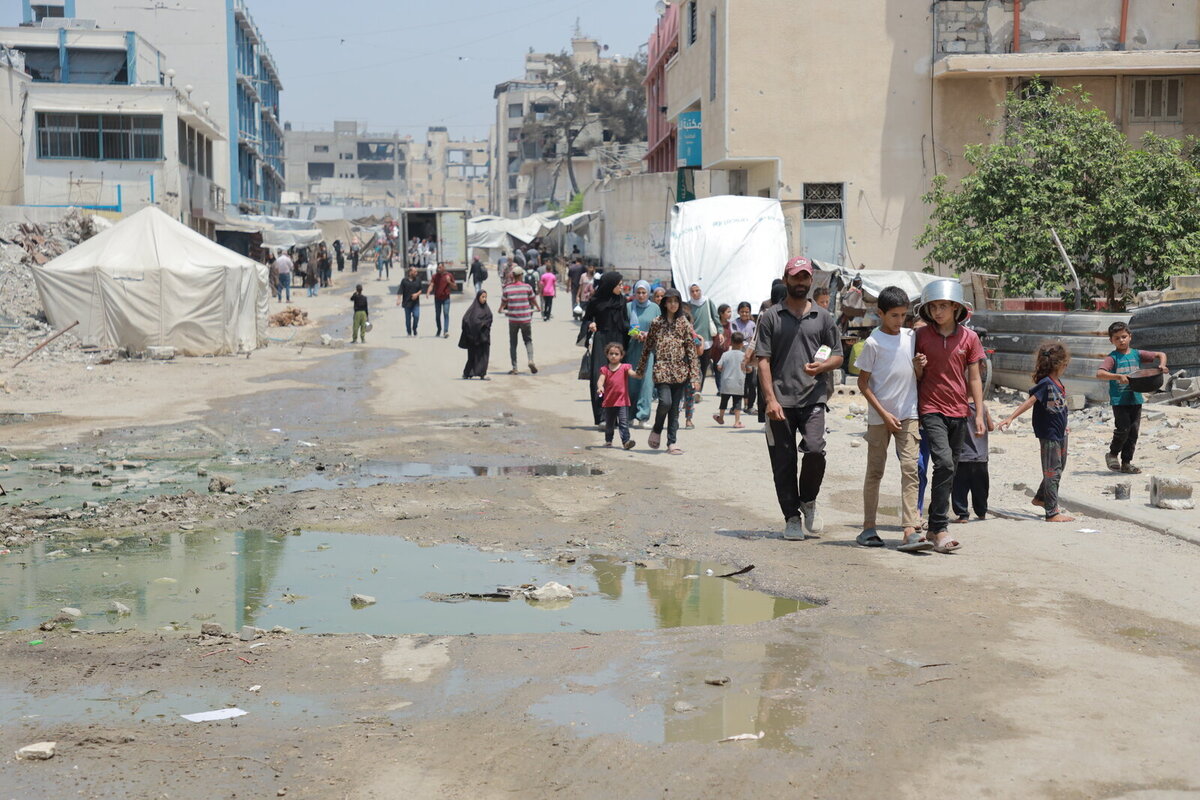
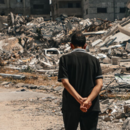
Foto: Destroyed streets of Gaza
Moving with no destination
In the following months, Aida and her children went through more than fifteen temporary homes in Gaza. They endured constant hunger as they could eat only once every two days. People around them were just as desperate, and even family ties began to come under pressure from circumstances and widespread scarcity. Aida also experienced gender-based violence from her own brothers, who disliked that their sister and her children stayed with them.
In December 2023, Aida’s husband attempted to return from the south to reunite with his family, but he was killed at the checkpoint. Aida learned about this death much later, because Gaza was completely cut from the communication lines for two months. “I still can’t comprehend that he’s gone forever,” Aida confides.
The deep-rooted trauma soon manifested itself in Aida’s health. The doctors diagnosed her with lupus erythematosus and rheumatic disease. Both conditions are autoimmune reactions caused by extreme levels of stress. This was accompanied by panic attacks: chest tightness, shortness of breath, dizziness, loss of balance, fear of death, feeling detached from reality, cold sweat, and trembling. In addition, feeling of nausea and exhaustion that cannot be remedied just by sleeping.
But Aida did not stay alone. Experts from the clinic supported by Caritas Czech Republic took her under their wing and helped her start addressing the problems that had accumulated over months of suffering and struggle for survival.
For the first time in my life, someone actually heard me out, with respect and patience,
Aida says with gratitude.
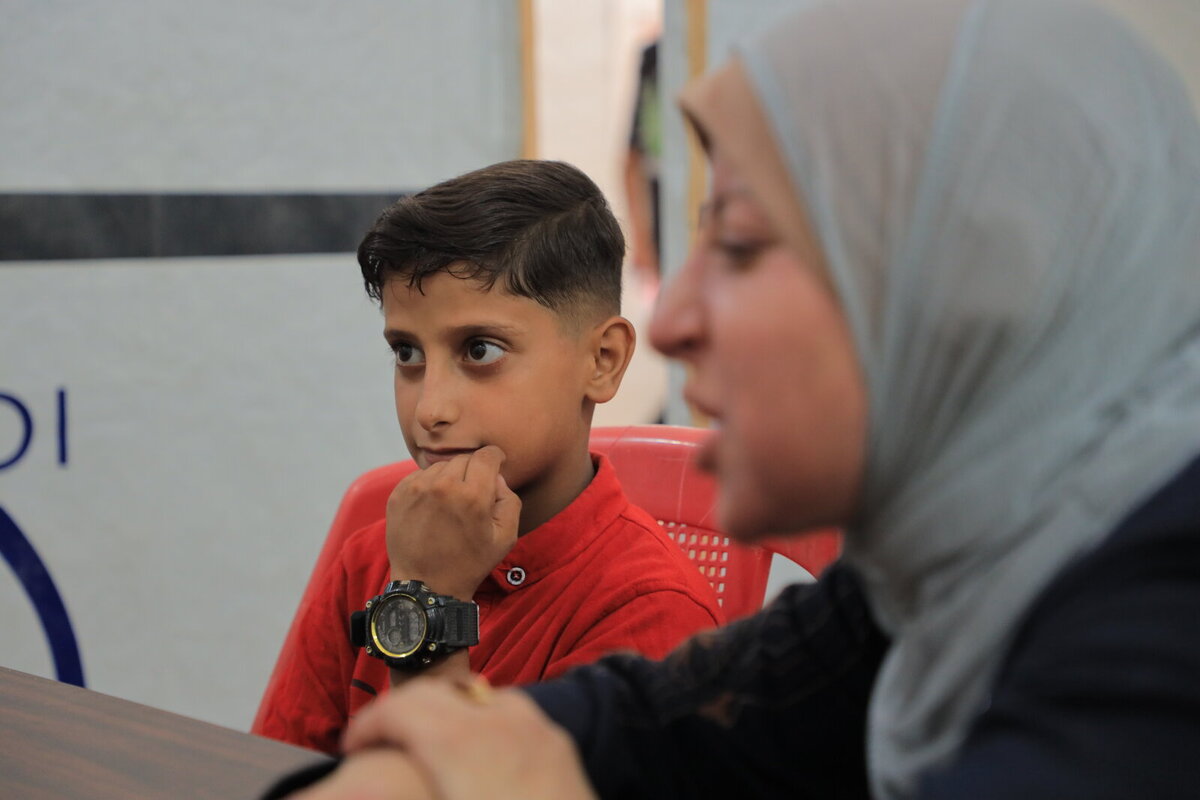
Foto: Aida and her son during a session at the clinic of Charity Jerusalem
The systematic work with a psychologist and a social worker, along with medical care and stable support for her children, enabled change. The panic attacks subsided, and Aida has been slowly managing everyday activities again. Such a shift does not happen after just one visit. It is the result of many tiny steps: regular sessions, safe space for tears, breathing techniques, body work, explanations of what is happening inside a person, and even help with practical matters – with food, hygiene, companionship to see a doctor, support to educate the children. And above all, from knowing that someone is here for you.
Caritas Czech Republic continues in local support
The clinic of Caritas Jerusalem financially supported by the Ministry of Foreign Affairs of the Czech Republic through Caritas Czech Republic, demonstrated that combining basic healthcare a psychosocial help is vital in Gaza. Although the project was concluded at the end of October, our colleagues remain on site and focus on working with people who need their time and patience. Caritas Czech Republic also continues to support the Palestinian organisation Sawa that operates a 24/7 crisis hotline.
Aida’s story is one of many touching personal testimonies in Gaza. Each experience is different, yet they all share one thing: without support, their development would be more difficult.
Fundraising campaign to help people in Gaza is still open. Please support our work in Gaza. Thank you.
Donate and help people in Gaza
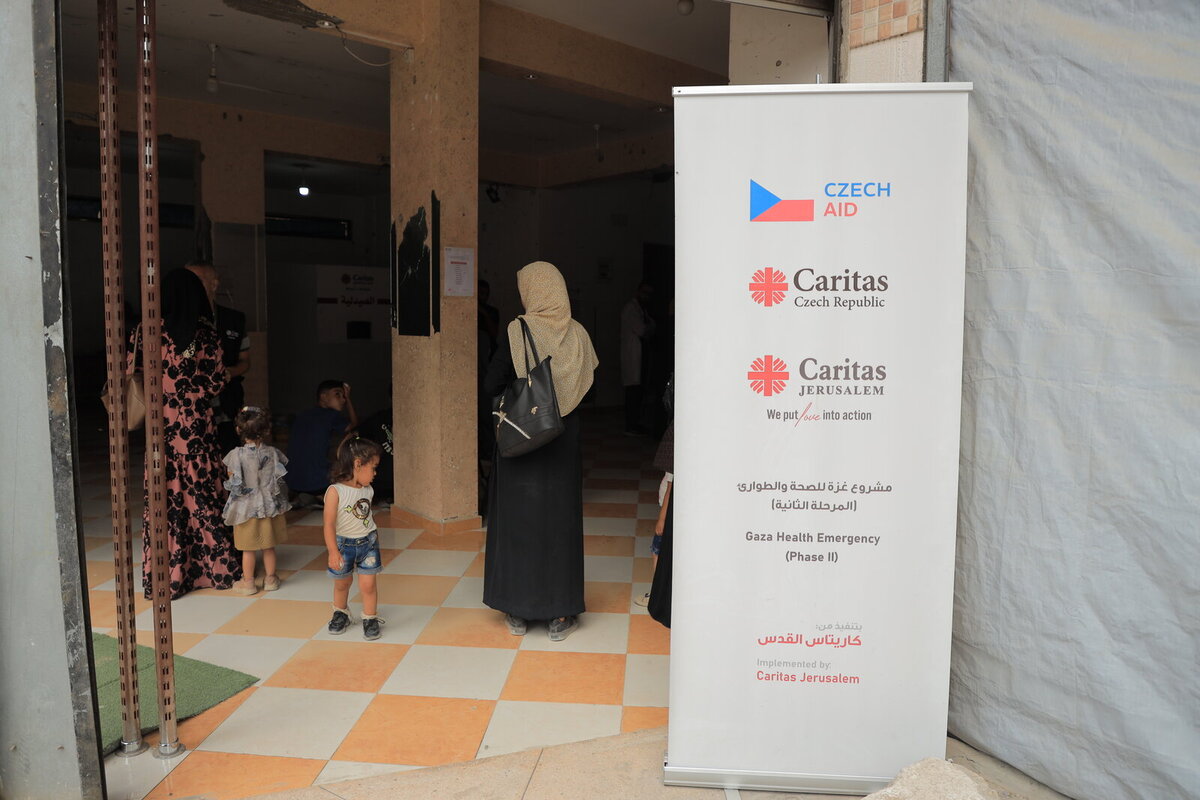
Foto: The clinic of Charity Jerusalem continues to operate and provide support