


January 15, 2026
News

Until recently, Almaz watched her children drink water with an anxious heart. The water was contaminated, posing an excruciating risk of stomach illnesses. Almaz and her family live in southern Ethiopia, where no other source of water was available. Last year, with support from Caritas Czech Republic, the Ministry of Foreign Affairs of the Czech Republic, and Caritas Ethiopia (ECC-SDCO/S), access to local water was restored. Thanks to this, Almaz no longer needs to worry about her children’s safety. Moreover, she saves several hours each week because she no longer has to fetch water from elsewhere. As a result, she has been able to grow her own vegetables and support the family budget. She has also taken responsibility for managing the water spring and has become the voice of her community.
Challenging life in southern Ethiopia
Almaz comes from the village of Banka Kebele in southern Ethiopia. In this area, unexpected natural disasters, such as floods or earthquakes, are occurring more frequently. These events are partly caused by climate change. In 2024, devastating landslides struck southern Ethiopia, forcing more than five thousand people to seek new shelter.
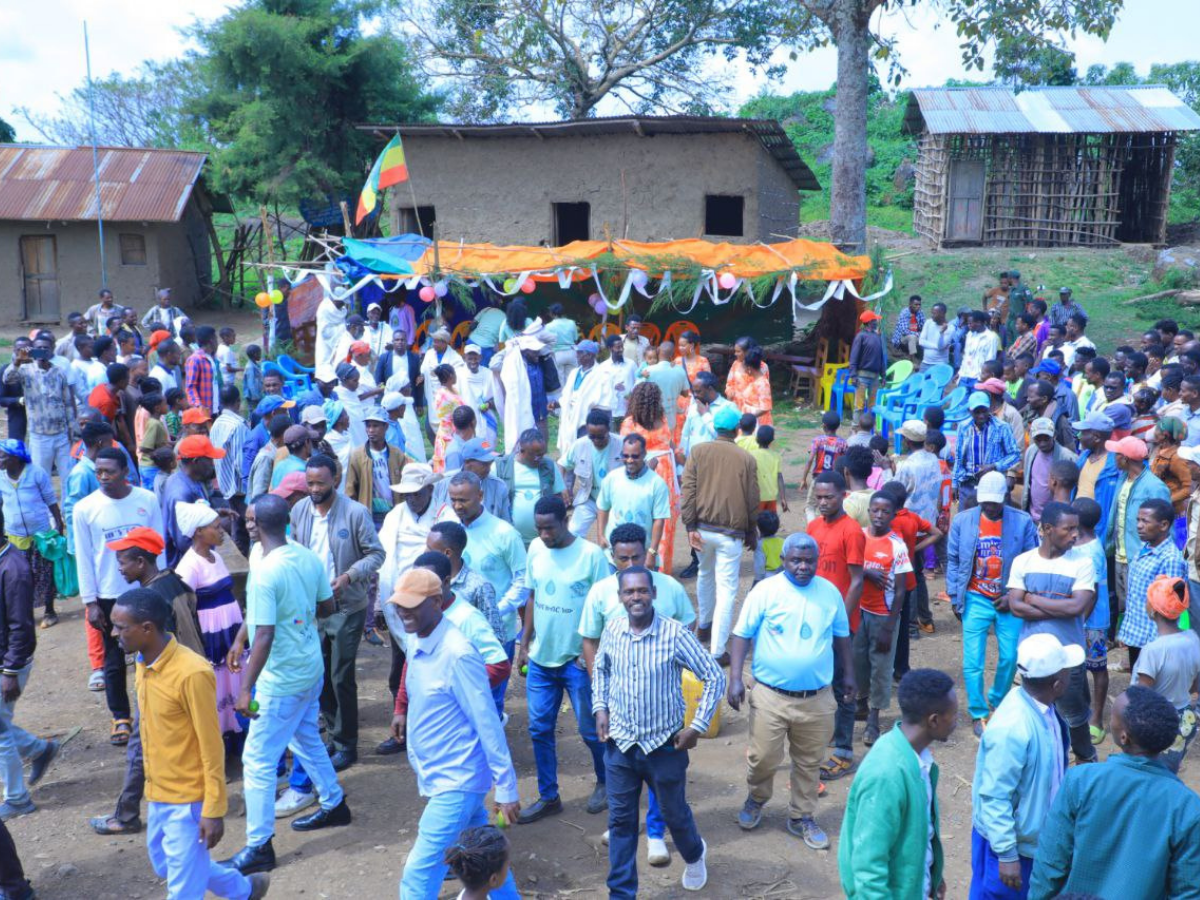
Photo: Landslides affected many communities in southern Ethiopia
Although Almaz’s family was not directly affected by this disaster, its consequences impacted the lives of many residents. Landslides destroyed local infrastructure and further complicated access to water and food. All of this severely threatened the health of residents in an area that already lacks access to quality healthcare. The economic crisis also deepened.
It was not only about the water anymore. There was fear everywhere – fear of sickness, fear of hunger, fear of tomorrow,
Almaz explains. Her children often had stomach aches, diarrhoea, and fever. They repeatedly missed school, and the family had to seek help at the local health centre, which strained their resources. Their neighbours found themselves in similar circumstances.
Every time my children drank that water, my heart tightened. I knew it was making them sick, but I had no choice,
Almaz says. She used to spend several hours a day fetching water from elsewhere. She always left home before sunrise and carried heavy containers from an open spring shared with livestock.
Water as hope for families in southern Ethiopia
Almaz and other parents felt enormous relief when access to drinking water was restored in their village. The goal of the activity, in which Caritas Czech Republic participated, was to build seven public water points for more than nine thousand people.
Photo: Almaz at the restored water access
The first time I filled my container with clean water, I cried. It felt like a heavy weight had been lifted from my chest. For the first time, I felt hope,
Almaz shares. Her children no longer have stomach illnesses or fevers. They returned to school feeling energised and empowered. Thanks to this, Almaz has more free time, as she no longer has to care for sick children or fetch water from far distances. Each month, she gains almost sixty hours of spare time. Almaz uses it wisely. She began growing vegetables, which has helped strengthen her children’s health. Moreover, she can sell part of the harvest to support the family’s income.
Before, all my strength was spent on surviving. Now I can plan. I can dream. I can think about the future, not just today,
Almaz illustrates.


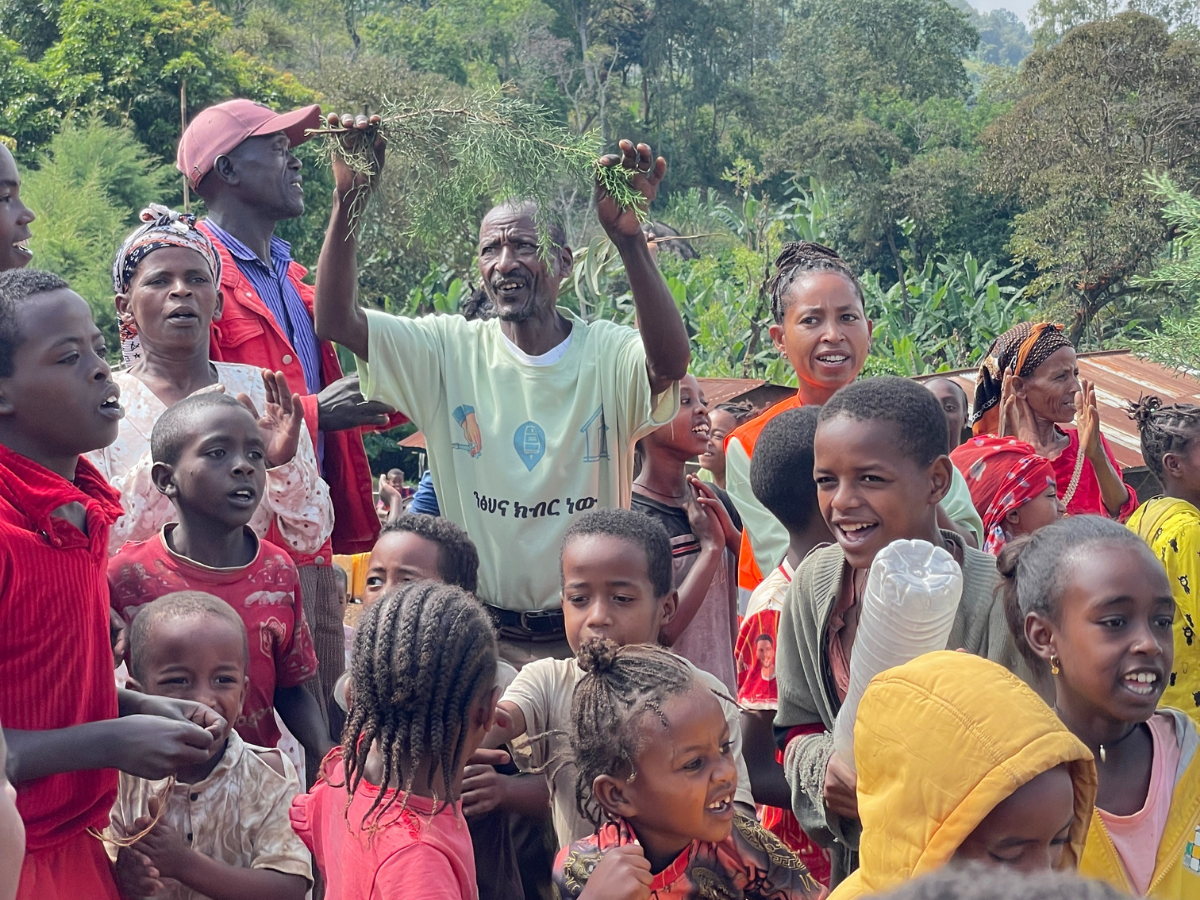
Photo: Water as hope for community
As a committee member, Almaz oversees the springs
In the area, Caritas Czech Republic also helped establish committees made up of local residents who are responsible for improving hygiene and sanitation in their communities. Half of the committee members are women, and one of them is Almaz. As a committee member, she now participates in decision-making, manages the water system, and educates neighbours on safe water practices.
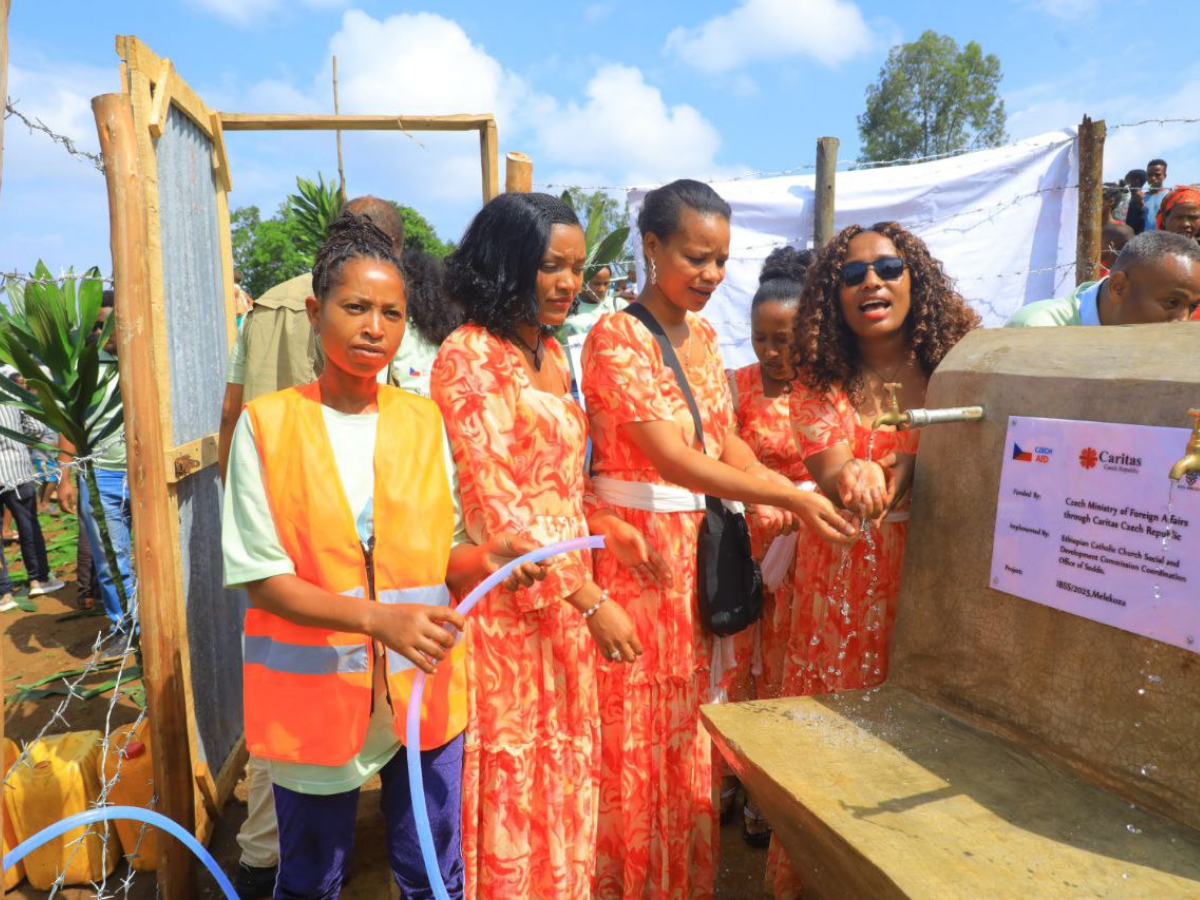
Photo: Almaz became a committee member in her community
"I used to feel powerless. Now I have a voice. This water belongs to us. It is our responsibility – and our future,” Almaz claims.
Activities of Caritas Czech Republic in Ethiopia
Apart from restoring access to water and setting hygienic standards, we focus on preparing the residents of southern Ethiopia for possible crises, including those that may occur due to the impacts of climate change. In a joint interview, Jan Líska, the Institutional Funding Coordinator of Caritas Czech Republic, and Barbora Ludvíková, Senior Humanitarian and Development Advisor, discussed this topic further.
In Ethiopia, we also support women’s self-help groups by providing them with basic investment capital, enabling them to gradually start small businesses. We also engage in healthcare, for example, by supplying local health centres with better equipment.