


December 19, 2025
News

The year 2025 brought both good and bad news. While a ceasefire was successfully agreed upon in Gaza in October, the humanitarian situation on site remains critical. People lack drinking water, food, medicine, electricity, and safe shelter. In Ukraine and Syria, people are also grappling with the consequences of long-term conflict. Caritas Czech Republic is working to improve their living conditions. For example, we are providing psychosocial care in Gaza, supporting the development of medical facilities in Ukraine, and restoring access to drinking water in Syria. We are also securing local water sources in Ethiopia, where we are simultaneously focusing on modernising agriculture, thereby enabling local farmers to better manage the impacts of climate change. However, this represents only the tip of the iceberg of our activities around the world. Let us, therefore, recall the greatest successes of Caritas Czech Republic’s work over the past year.
We facilitated access to healthcare and psychosocial support for people in Gaza
In Gaza, we focused our support primarily on health and psychological assistance. Until the end of October, we supported a clinic operated by Caritas Jerusalem, where people received basic healthcare and psychosocial care. One of them was Aida. Due to the conflict in Gaza, she has lost her husband, her home, and the support of her family. Without shelter, she was left alone to raise five children. Over time, the extreme stress eventually turned into health problems and panic attacks. Thanks to regular sessions and a safe space for tears, Aida’s health gradually improved.
For the first time in my life, someone actually heard me out, with respect and patience,
says Aida.
We also continue to support the work of the Sawa organisation based in the West Bank. It provides assistance to the residents of Gaza through a psychosocial support crisis line. According to the operators, the greatest paradox of their work are the moments of calm, when the phones stay silent. Because only once the phones start ringing, the operators feel relieved. They know that their clients are alive.
This year, we also presented to the Czech public our exhibition "Gaza Beyond the Headlines", which introduced the daily lives of local residents through photographs and their stories. The exhibition came to life in cooperation with Caritas Jerusalem, the Sawa organisation, and with the financial support of the Ministry of Foreign Affairs of the Czech Republic. We also thank the donors of the Caritas for Gaza campaign for supporting our activities in Gaza.


Photo: We provide psychosocial help in Gaza
We improved rehabilitation care in Ukraine
In Ukraine, we have been supporting the development of rehabilitation care since 2024. This September, Ukrainian doctors from six hospitals near the front line in the Dnipropetrovsk region travelled to Prague. The aim of their study visit was to learn advanced techniques and procedures that will make it easier for people to return to normal life after serious illnesses and injuries.
Subsequently, we reconstructed the medical facilities where these doctors work in Ukraine and equipped them with high-tech technologies, including, for example, virtual reality that facilitates people's return to everyday life. Physiotherapists and rehabilitation teams are now fully utilising devices that help restore the motor, cognitive, and psycho-emotional functions of patients after severe injuries, strokes, or trauma.
Simultaneously, Caritas Czech Republic is helping build a network of mental health centres in Ukraine. Psychological care is needed for over seventy per cent of the local population. We are helping establish these centres as part of the "How are you?" project initiated by First Lady, Olena Zelenska. In Ukraine, we also provide tutoring lessons to children who have missed out on school due to the war. Furthermore, we help people repair destroyed homes and secure access to drinking water. Our work here continues, because Ukraine still needs our support.


Photo: Our work in Ukraine continues
Despite the ongoing humanitarian crisis, we bring good news from Syria
For the past fourteen years, people in Syria have been facing the reality of civil war. Although the main areas of fighting have quietened, the situation in the country remains uncertain even a year after the fall of Bashar al-Assad's government, and humanitarian conditions stay catastrophic.
This summer, the security and humanitarian crisis deepened, for example, in the south of the country. Violence in the region escalated, and the resulting blockades limited the delivery of humanitarian aid. However, Caritas Czech Republic’s operations in Syria are situated primarily in the north-west, near the Turkish border.
A success, nonetheless, is that we are managing to restore access to drinking water in Syria. We supported, for example, Kamal, a restaurant owner and father of seven young children.
Thank God, water reaches us regularly and free of charge. This has changed so much in our lives. We no longer need to buy water, and we have become more mindful of our health,
says Kamal, who can now save money and time he used to spend in queues at water tanks. Moreover, he can rest knowing that quality water does not compromise his health. As part of this activity, Caritas Czech Republic also places emphasis on setting hygiene and sanitary standards in the north-west of the country.

Photo: In Syria, we restore access to water
We restored local water sources in Ethiopia
We also restore access to water in southern Ethiopia, where we have joined forces with local organisations. Jan Líska, the Institutional Funding Coordinator, and Barbora Ludvíková, Senior Humanitarian and Development Advisor, also visited Ethiopia at the end of the year to monitor our activities in the country and establish contacts for the future. In addition to water supply in Ethiopia, we also assist local farmers in modernising their livelihoods, which has had a positive influence on managing the impacts of climate change.


Photo: In Ethiopia, we restore access to water
In Zambia, we help farmers manage the impacts of climate change
We also focus on similar activities in Zambia, where farmers are facing, for instance, increasingly extreme droughts that destroy their harvest. Therefore, Caritas Czech Republic arranged a series of educational sessions for local farmers and entrepreneurs. We trained them in techniques that would help them implement ecological methods or develop their business and marketing skills.
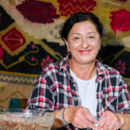
Conceptor, a farmer from southern Zambia and a mother of six children, also attended the training. She learned, for example, how to make compost from manure. Thanks to this, she can now keep her land in good condition and preserve it for future generations.
I no longer have to buy food because my harvest is enough for the whole family,
shared Conceptor.
We also support refugees who have come to Zambia from other African countries. We concentrate on education and connect Czech technologies with Zambian partners and companies, such as in the field of agriculture.

Photo: Farmer Conceptor
In Georgia, we spread awareness about cancer prevention
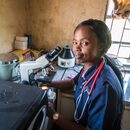
In Georgia, we focused primarily on the healthcare sector and social services this year. We built a screening centre in the city of Zugdidi back in 2019, however, prevention is not that widespread in Georgia. We therefore focus on cancer prevention through activities such as awareness-raising and vaccination against HPV viruses. We helped Anna, a teacher who received an early cervical cancer diagnosis. Today, Anna herself raises awareness about the screening centre and the importance of prevention.
Additionally, several medical workers from Georgia came to the Czech Republic this year; they completed an internship at the Department of Paediatric Haematology and Oncology, Second Faculty of Medicine at Charles University and Motol University Hospital. A doctor, a nurse, and a psychologist were able to test the work of Czech experts in practice. Now, with the help of Caritas Czech Republic, they will implement their methods and procedures in medical facilities in Georgia.

Photo: Healthcare workers from Georgia during an internship at Motol University Hospital with Prof. Jan Starý
In Moldova, we are building alternative water sources
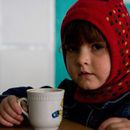
In Moldova, we managed to create a unique rainwater harvesting system that can harvest, filter, and store water. It currently operates in a kindergarten in the village of Bilicenii Vechi, where it has contributed significantly to improving hygienic conditions. More than one hundred and ten children have access to sustainably and economically sourced water.
In Moldava, we have also improved the quality of home care. We helped ensure that seniors and people in difficult life circumstances receive not only practical support, but also emotional support and a sense of security. In the country, we provide accommodation for people with mental illness. Since 2014, we have helped establish ten medico-social centres and train more than five thousand healthcare workers.
 Photo: Kindergarden in Moldova