


February 17, 2026
News
While people in Ukraine have been dealing with the consequences of the war for four years, people in the Czech Republic and around the world have been facing disinformation and myths about humanitarian aid for Ukraine. As Caritas Czech Republic, a non-profit organisation that has been operating in the country for a long time, we would like to shed light - and refute - the myths that resonate the most in society.
Myth 1: "Aid does not reach people; it is stolen or misused"
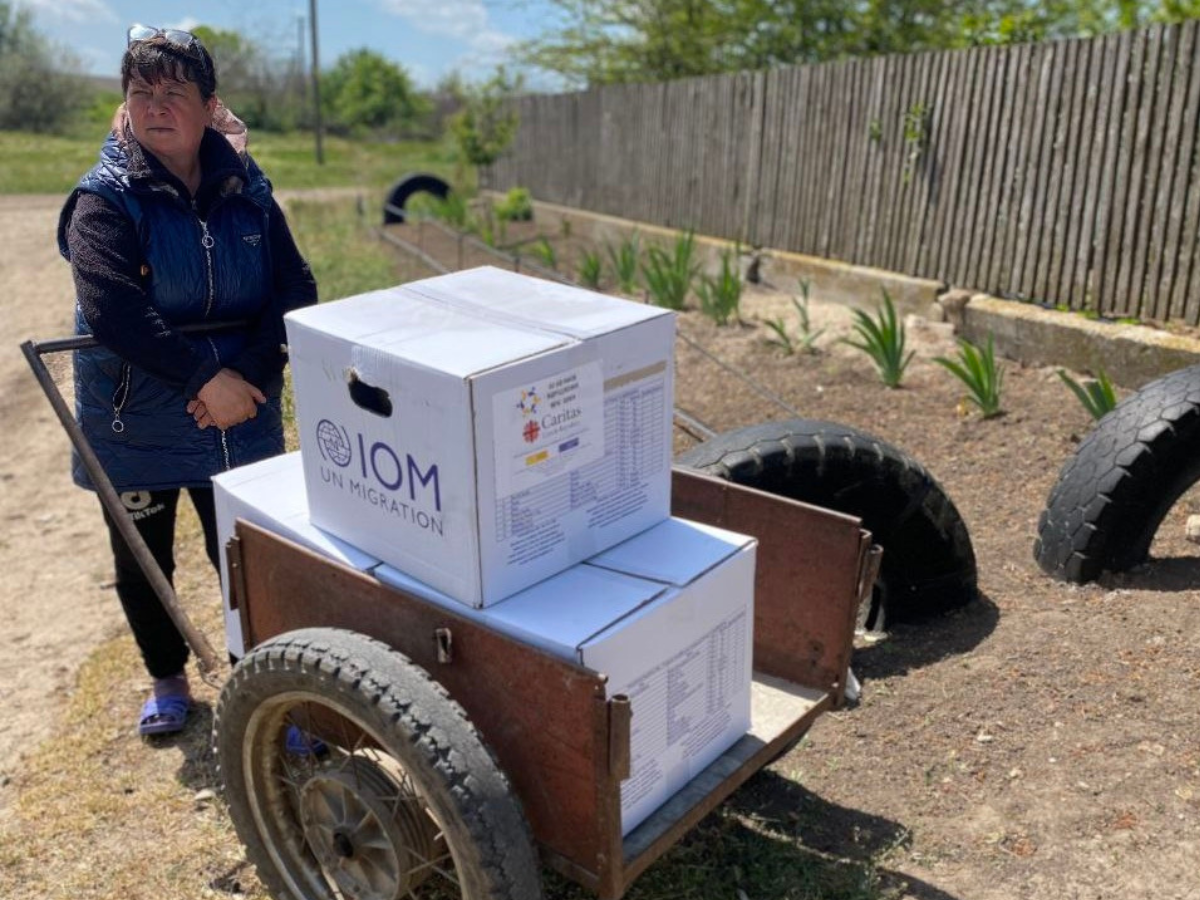
Humanitarian and financial aid for Ukraine passes through one of the strictest control systems in the history of international assistance. The American agency USAID and other institutions watch the aid through audits, monitoring, and collaborations with inspectors across authorities that identify risk areas and ensure accountability for potential misuse.
Humanitarian aid financed by the European Union is overlooked by a system of mandatory reporting, audits, and control mechanisms, according to the Directorate-General for European Civil Protection and Humanitarian Aid Operations.
The use of funds from the Caritas for Ukraine fundraising campaign is also subject to controls. These mechanisms are in place even in our projects that are financed by Czech public funds. For example, we provide donors with stories about our work in Ukraine throught articles on our website or posts on social media, where we inform them about where the aid assists and who its recipients are.
Last year, for instance, we helped Oleksandra join an accounting course in her new home in western Ukraine, thanks to our study grant. In eastern Ukraine, we delivered fuel for winter to young Evelina and her parents. We offered additional lessons to Amira, an eighth-grade student who had missed school due to the war. We provided Natalia, a mother of four, with accommodation after her family moved to the relative safety of western Ukraine.
Myth 2: "Europe writes bank cheques which it cannot afford"
Aid to Ukraine does not impose a financial burden that Europe cannot afford. According to the Kiel Institute's March 2025 analysis, European aid to Ukraine amounts to about 0,1 % of European GDP, which is a low share relative to the size of European economies. Therefore, from an economic perspective, it invests relatively small funds in regional stability and its own security. The consequences of unchecked Russian aggression in Europe would cost the Western world much more.
Myth 3: "Ukrainians flee the country, so helping directly in Ukraine makes no sense"
Some Ukrainian residents leave the country and seek refuge, for instance, even in the Czech Republic, where Caritas also assists them. However, at the moment, 12.7 million people directly in Ukraine need humanitarian aid. Caritas Czech Republic operates in six regions in Ukraine, both in the west and in the east.
In the immediate vicinity of the front line, we improve rehabilitation care for wounded civilians and soldiers. As a result of the war, more people have been facing health complications, such as strokes, which have been occurring more often, even among younger generations. People who remain in Ukraine also require support when dealing with mental health issues. That is why Caritas Czech Republic is establishing local mental health centres where adults and children can find free help.
Myth 4: "The war will destroy everything, so aid will turn into dust anyway"
Humanitarian assistance to Ukraine does not come only in the form of one-off food packages or basic hygiene supplies. A crucial part of the aid focuses on resilient and stabilising projects that are designed to maintain basic services even during recurring attacks. For example, humanitarian partners build emergency water systems or support heating.
Caritas Czech Republic follows the same approach. After the bombing of the Kakhovka dam, we restored access to water for affected communities. However, the risk that newly built infrastructure will be damaged cannot be completely ruled out. That cannot be the reason to stop humanitarian aid for Ukraine altogether. The local people need to know that Europe and the world stand behind them. At the same time, it is important to note that in the last four years of our presence in Ukraine, we have not recorded a single case in which Russian attacks destroyed buildings we established or renovated.
Myth 5: "The aid is ineffective because the war is still going on"
Humanitarian aid does not aim to avert the Russian invasion. Its essence is to support people who must face it. Displaced persons, ill or wounded, school children, seniors, and others.
However, state support is crucial for the strength of humanitarian assistance. According to the draft state budget for 2026, which is now before the Chamber of Deputies, the government proposes reducing humanitarian aid spending by 70 % year on year. This cut would also affect Czech assistance to Ukraine, as the government’s proposal abolishes the Humanitarian, Stabilisation and Reconstruction Assistance Programme for Ukraine, which is worth 500 million CZK.
Caritas Czech Republic disagrees with this proposal. We will continue to support Ukrainian residents as the fifth year of the war begins this February. Their determination does not waver, so our solidarity must remain strong.