


September 16, 2015
Syria
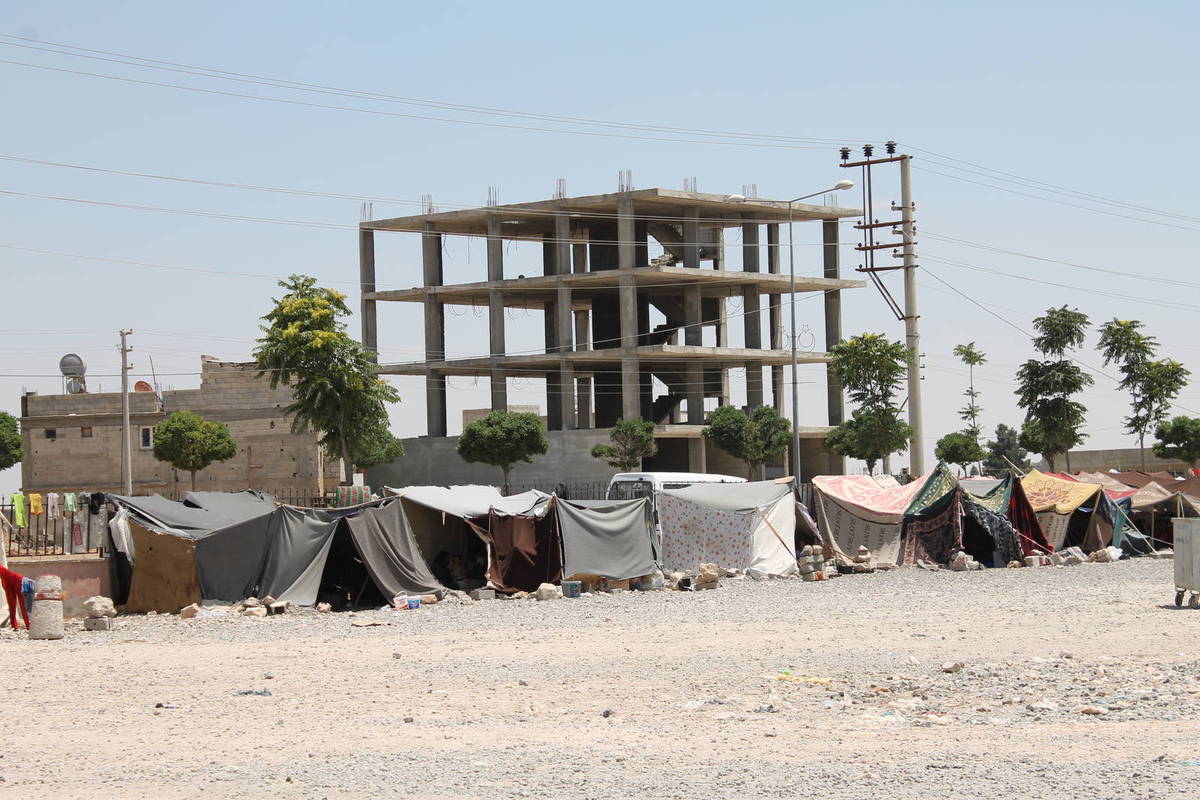
An anonymous Syrian organization, and Caritas partner, provides humanitarian aid to the families in need in Damascus. Unfortunately, the name of the organization cannot be mention in public for security reasons. In July, the organization registered an additional 150 families to receive aid, yet the number of people in needs continues to amplifying alongside the conflict. The households outside the capital and provinces such as As-Suwayda, Hasaka, Aleppo, Homs and Dar'a ask to be registered as well.
Alongside the growing number of families in need, demands to provide additional assistance in general have escalated. The mothers ask for clothing for children and other household equipment. Humanitarian staff has visited several families in person to evaluate and monitor their living conditions, and of course their psychological state.
Mr. Riad was the one of the visited persons. Like many other Syrians, he was the victim of kidnapping. On the way to work he fell into the trap of an armed terrorist gang in the area of Tal Al, which imprisoned and physically harmed him for three days. He was released after paying one million Syrian pounds as a ransom (about 110 150 CZK). They dropped him off at an animals’ barn and then had to go on foot home to his wife and three children (15, 12 and 9 years). The incident caused him severe mental distress and a tough financial situation for his entire family after paying the ransom, as they had to borrow money from their friends and relatives. Furthermore, Mr. Riad’s current income is not sufficient to support the family and livelihood any longer. Hana, his wife, found help through Caritas’ partner organization, and they now receive food packages.
The organization’s work is made difficult by the worsening security situation. In the summer, the transportation service is often disrupted by grenades and gunfire. Electricity usually worked only three hours a day and the temperature climbed to highs of 45° C. The distribution center, though, persevered, which was appreciated by all beneficiaries.
The downtown workers in Damascus visited the family of the widow Josephine. Her older son assumed responsibility for the whole family six years ago after the death of his father. He left the school in order to make money and help his mother and younger brother. He learned how to repair and maintain computers. While Damascus was being severely hit by mortar shells, his leg was amputated. The doctors replaced the amputated leg with an artificial limb him, which allowed him to at least partially walk. Josephine had worked in the school cafeteria before the tragic incident happened. She quit her job in order to be in a hospital near his son for two months. After returning her son home, he needed the continued support and care.
Since 2014, Caritas of the Czech Republic has provided aid to those most in need in war-stricken Syria. Even though this number continues to grow, its partner organization nonetheless seeks to improve the physical and mental health of individuals and families in Damascus.