‘Mum, why are they sending Shaheds at us?’ asks four-year-old Davyd, forced to take shelter daily at nursery and in his own home. The boy was born and lives with his family in Kyiv. He does not understand why rockets and drones are attacking his city. They are destroying everything, even nurseries, schools and maternity hospitals. Because of this, Davyd’s dad – a theatre director, joined the military. It also means that celebrating a birthday, going to football practice and sleeping in his own bed can be dangerous.
Yellow alert means the safe room
Davyd, or Dada as his parents call him, is almost the same age as Russia’s full-scale invasion of Ukraine. The boy was just a few weeks old when, on the morning of 24 February 2022, his native Kyiv was shaken by explosions. Since then, Dada’s childhood has been a contrast between the greatest achievements of the modern world and its fragility.
When I see my four-year-old son programming the movements of a toy fish in a STEM class, I think: rockets and drones can’t pose a threat to children in such a civilised world. Yet they keep flying at us again and again,
shares Lera, Dada’s mum. She provides all-round support to pregnant women. Before the war, she was a journalist for a podcast on motherhood; now she works in communications for an organisation that, amongst other things, builds shelters in maternity hospitals. Lera is pregnant for the second time and, like no one else, understands the challenges faced by women giving birth during the war in Ukraine.
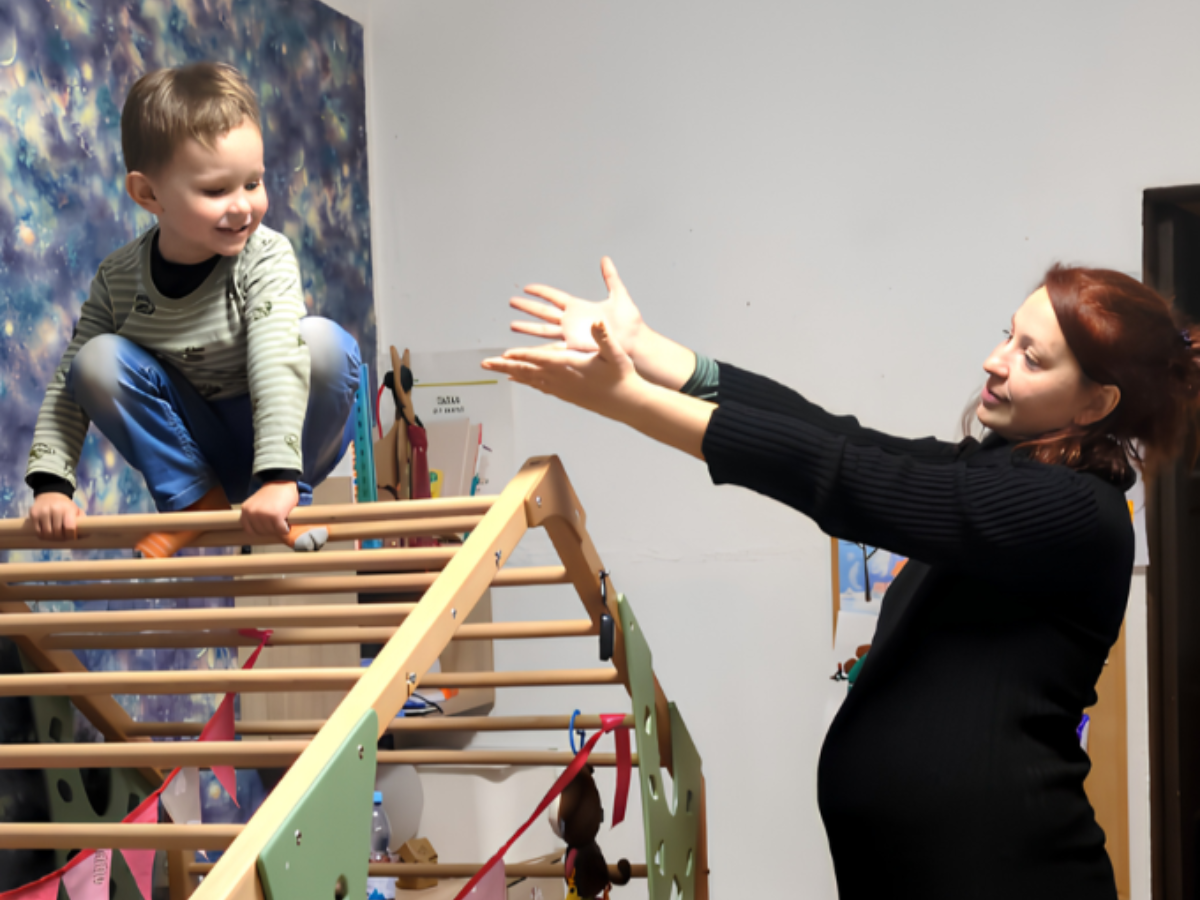
Photo: Davyd is soon to be a big brother
We meet near her home on the left bank of Kyiv. An intermittent air-raid siren sounds, signalling an amber-level alert and a drone attack. We’ve only just managed to pick Dada up from nursery and make it home when our phones alert us that the ‘all-clear’ has been given. On the way, the little boy tells us he loves the characters from ‘Paw Patrol’ and building sets, and that he’d managed to do the voice-over for one of his dad’s plays.
Whilst his father Slava is on duty, his mother Lera manages the family’s daily life, her own career and the Dada’s leisure. Because of the war, this demands a tremendous effort on her part. What’s more, Dada is soon to have a little sister.
Since the end of summer, the air-raid sirens in Kyiv have been wailing daily. In November, a record 14 air-raid alerts were recorded in a single day. Sometimes the danger lasts for up to 12 hours. When an air raid alert lasts through the night and into the morning, nursery isn’t an option. The mother has to cancel her broadcast and work from home — taking a toll on both her career and her income.
Due to extensive damage to power infrastructure, the city is plunged into darkness. Along with the electricity, the water supply often cuts out after shelling. In Dada’s house, the heating has recently been out of action due to a fault. So the family relies on a charging station, a space heater and electric blankets to keep warm.
The constant threat of attack has forced the young family to completely change their daily lives:
- Move to a building with a shelter.
- Give up extracurricular activities outside nursery.
- Forget about cycling in the park because of the ‘Shahed flight path’ overhead.
- Travel 100 kilometres to their grandmother’s village every week to catch up on sleep and recover.
- Celebrate Dada’s birthday away from the city.
- Keep a constant eye on safety updates through monitoring channels and apps.
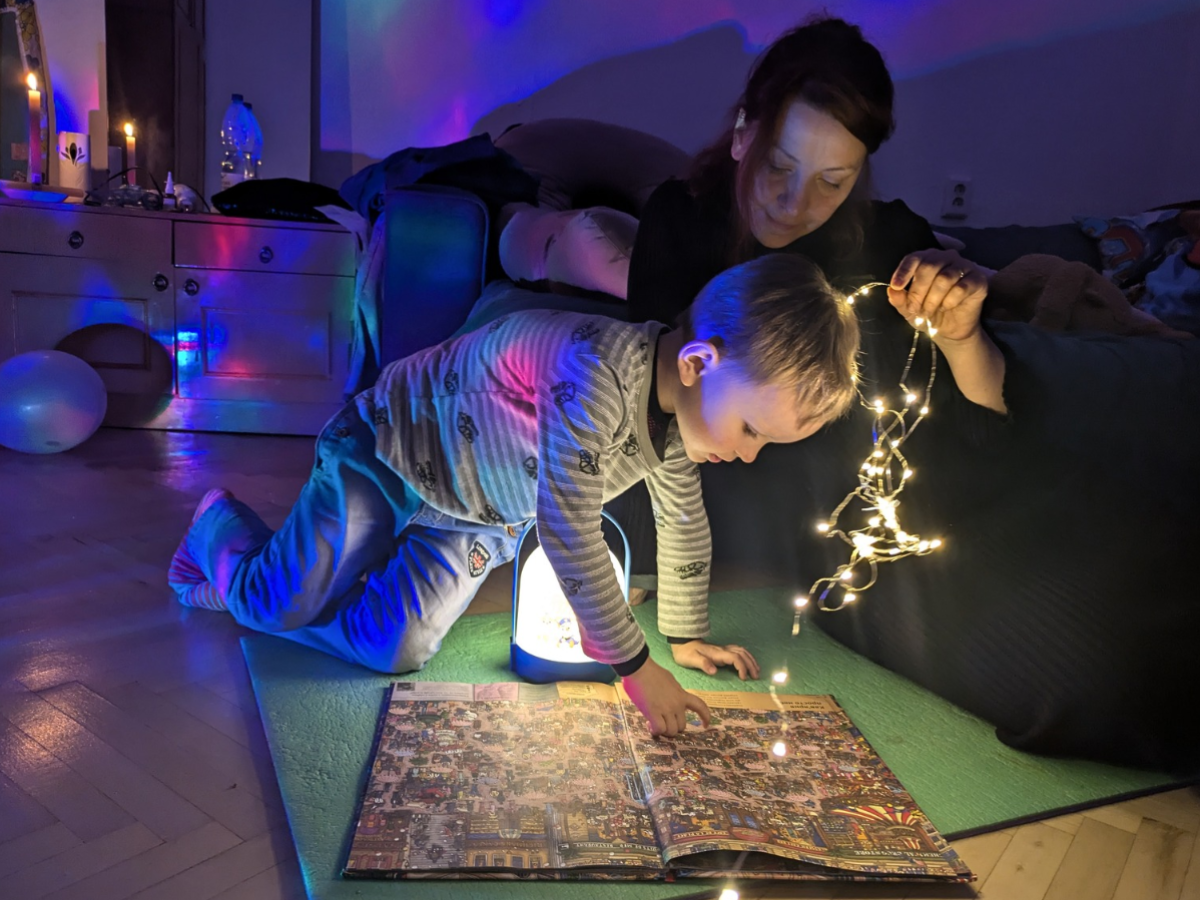
And we have a safe room, too. We sleep here together,
Dada adds. His mum explains that this is the room in their flat furthest away from the ‘Shahed flight path’ used by drones attacking the city. Just as importantly, having a designated place at home where a child can feel safe is essential for their emotional well-being.
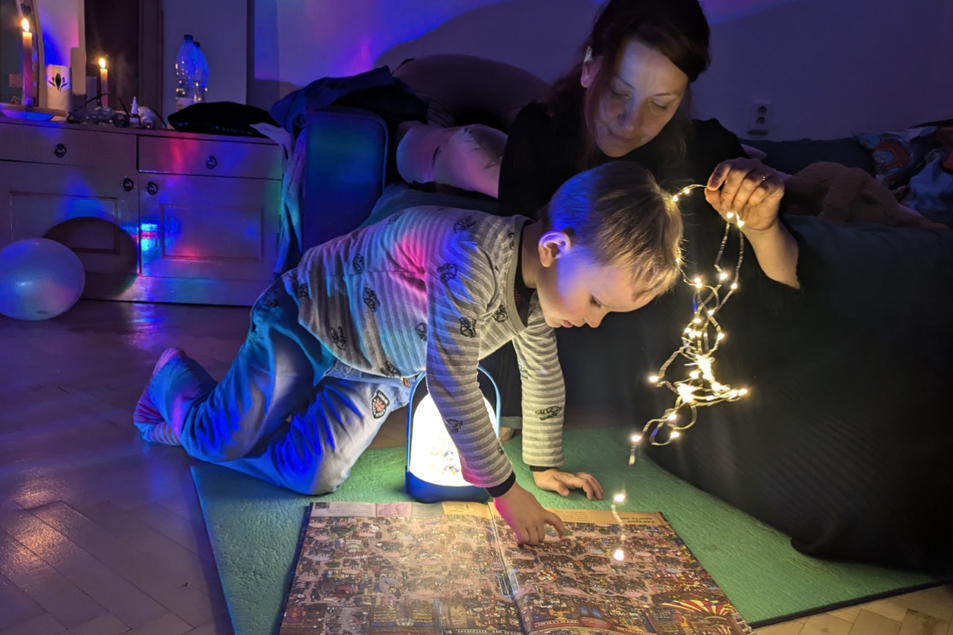
Photo: During yellow alert, the family hides in the safe room
Red alert means sleeping in the basement
Our conversation is interrupted by the continuous siren signalling a red-level alert. This means a missile threat, including the threat of ballistic missiles. In autumn 2026, the intensity and destructive force of missile attacks on Kyiv reached their highest levels since the beginning of the war.
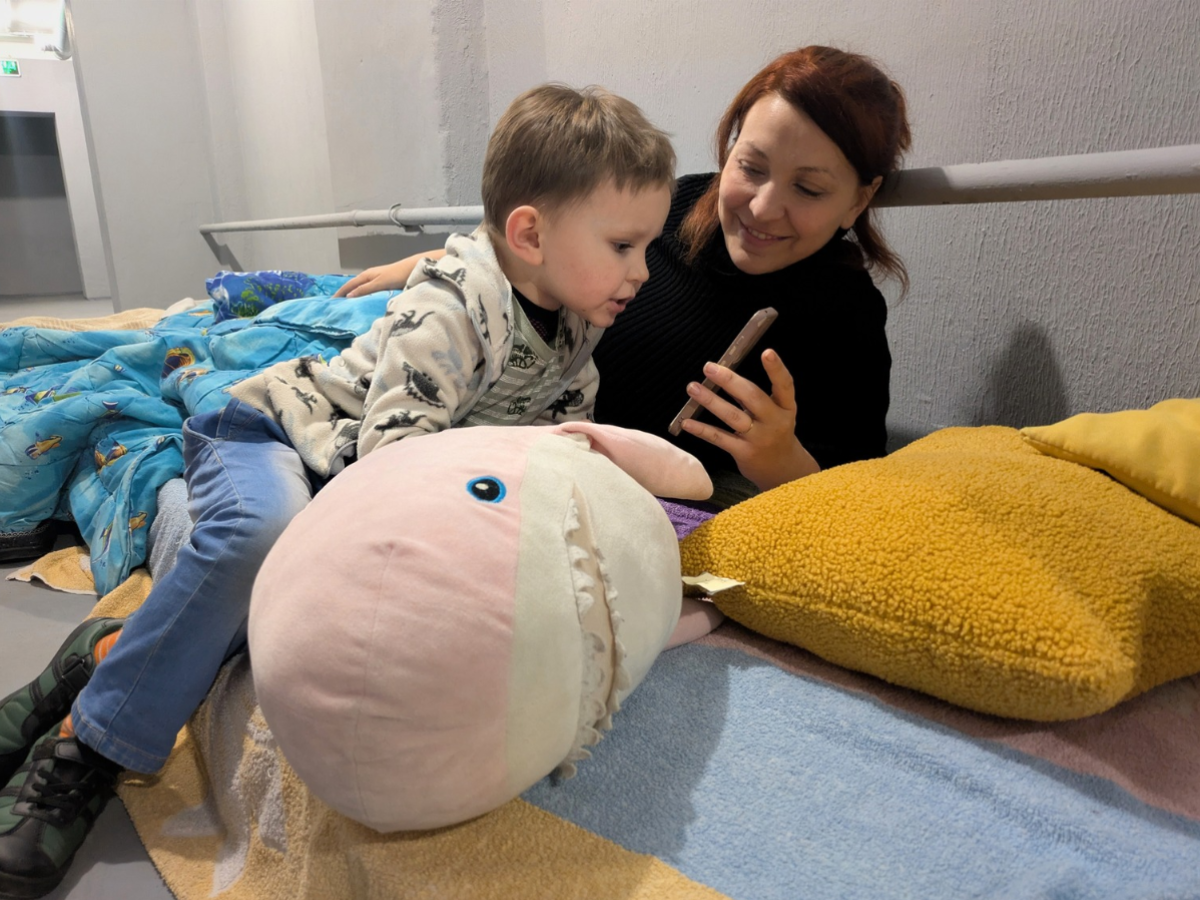
For situations like this, the residents of Dada’s building have a shelter in the basement. His mum and dad have brought down mattresses and warm blankets.
If missiles are launched, we have 40 seconds to make our way down four floors to the basement,
explains Lera. The little boy quickly puts on his shoes and grabs his favourite pink shark, while his mum picks up a rucksack and the electric heater.
Just a few days ago, a missile attack on Kyiv lasted throughout the night, forcing Dada and his parents to sleep in the shelter. But deciding whether to stay at home or head down to the basement becomes harder every time – especially when an air-raid alert sounds late at night or in the early hours of the morning. No amount of toys brought down to the basement, no heater, and no audio fairy tales can replace the carefree sleep a child should be able to enjoy in their own bed. Still, there is one thing that warms Dada’s heart in all of this.
I love running to the shelter at night: Dad carries me down the stairs really fast, and I cover him in kisses,
the little boy says every time the family opts for the basement. We were lucky: this time the rockets missed the neighbourhood, and we’re heading back upstairs.
A dream of the sea and a world where help is always at hand
To preserve Dada’s childhood – with his dad, grandmother, friends and little sister all close by – the young family faces countless challenges and dangers. But being together gives them the strength to carry on.
Dada believes the war will end and he’ll go back to the sea with his parents — a constant topic in the family. That’s where Dada used to spend his summers with his grandmother. Now the sea and their home there are occupied.
Lera is grateful for the support of her community of women. She remembers the moment when her husband had just been mobilised. It was a time when everything in her life was being turned upside down: a new job, a young child to care for and an overwhelming sense of despair. Lera wrote a social media post asking for support, and an incredible number of people responded. Parcels filled with gifts arrived from all over, along with simple but heartfelt messages: ‘What can I do to help?’
‘That was when I realised I wasn't alone. When safety is no longer something you can take for granted, I find the strength to carry on in believing that the world I create around is a kind one. Because, even in the hardest of times, there are people by my side who are ready to help. And that makes everything a little less frightening – even when you live under the threat of missiles,’ Lera concludes.
Caritas helps equip underground schools
Like Davyd, children across Ukraine are growing up in the shadow of war.
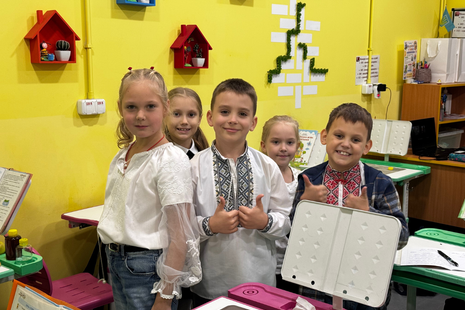
The situation is particularly urgent in Kharkiv, which regularly comes under attack due to its proximity to the Russian border. Today, around 113,000 children live in the city, including 90,000 school-age children. For many of them, underground schools offer one of the few opportunities to safely return to in-person learning.
That is why Caritas Czech Republic is helping equip two underground schools and the very first newly built underground kindergarden in Ukraine. Together, these educational facilities will provide a safe learning environment for more than 3,000 children.
Support the Caritas for Ukraine fundraising campaign before the end of the year. Every donation will help children return to the classroom.
Donate
 War has stolen their childhood. Help the children in Kharkiv keep at least their school