


May 20, 2026
News

Samuel is in his early twenties and has been farming for only a short time. By contrast, Clerkson has worked in the industry since the 1990s. However, both of their livelihoods are threatened by climate change. Droughts are destroying harvests, yet agriculture is a common source of income in Zambia. That is why Caritas Czech Republic is training local farmers in modern techniques to help them better manage the impacts of climate change.
Dreaming about a successful farm
When Samuel finished school, he decided to start farming. He hopes that this will allow him to save enough money to move out of his parents’ place. They support his work and are proud of him. He is not married but takes care of a young daughter.

Photo: Samuel with his parents
He grows maize, but his harvest was badly affected by severe drought. Thanks to training from Caritas Czech Republic, he learned, for example, how to make his own compost, which he says has helped him a lot.
He enjoys his work and would like to expand his farming in the future. “Once I am successful, I would like to use tractors. That is my dream,” Samuel shares.
Family smallholding
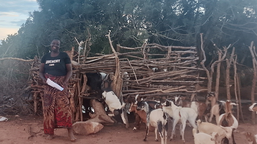
Although Clerkson began farming in the 1990s, he has no employees. He is married with eight children, so everyone helps with the work. He sells his harvest either in local markets or directly from his farm. He also takes the fruit to the nearest town.
The main reason I became a farmer is that when I was looking at all the things we buy from the markets, for example, cabbage or tomatoes, I realised that only those with knowledge of farming are able to grow their own produce,
Clerkson explains and adds that, thanks to farming, he thought his life would be easier. However, in recent years, his activities have been affected by climate change. Due to droughts and frequent weather changes, his harvest has not done well.

Photo: Clerkson shows his farm to Caritas Czech Republic's team
In addition to the training, he was given the opportunity to try out new farming practices on so-called demonstration plots, which are sections of land where new methods and crops are tested in practice. These plots serve as learning sites for other farmers who, after the harvest, provide produce for sale or personal consumption. As a result, Clerkson managed to grow three 50-kilogram bags of sunflower seeds, which he later sold at local markets.
Experienced farmer and brand-new chicken keeper
Caritas Czech Republic also helped Ireen, who has farmed for many years. She is married and has five children, but just a few months before our conversation, she lost her 27-year-old son. “My son was my best friend. He was everything to me,” she remembers.

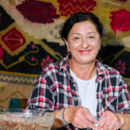
Photo: Ireen
Ireen continues to dedicate herself to her farm. She grows maize and plants fruit trees, such as mangoes and peaches. Thanks to the training, she recognised her mistakes and can now care better for her harvest.
Apart from that, Ireen also started keeping chickens. “I was just starting out in poultry when I got in touch with Caritas. I had been in the business for about two months,” she explains.
As a brand-new keeper, she learned, among other things, how to feed the chickens and how to give them medicine. She also found out how important it is in poultry farming not to overcrowd the birds, but to ensure that each one has enough space.

Photo: Ireen keeps chicken
Caritas Czech Republic in Zambia
Zambia is home to Caritas Czech Republic’s largest office. We help modernise local agriculture, which is a source of livelihood for many people. In addition to supporting farmers, we also introduce Czech technologies and know-how to the country.
Moreover, we support refugees who have come to Zambia from neighbouring countries. For example, we help them start businesses or provide university scholarships.
Thank you for helping us contribute to lasting positive change in Zambia and other countries.