


April 9, 2026
News
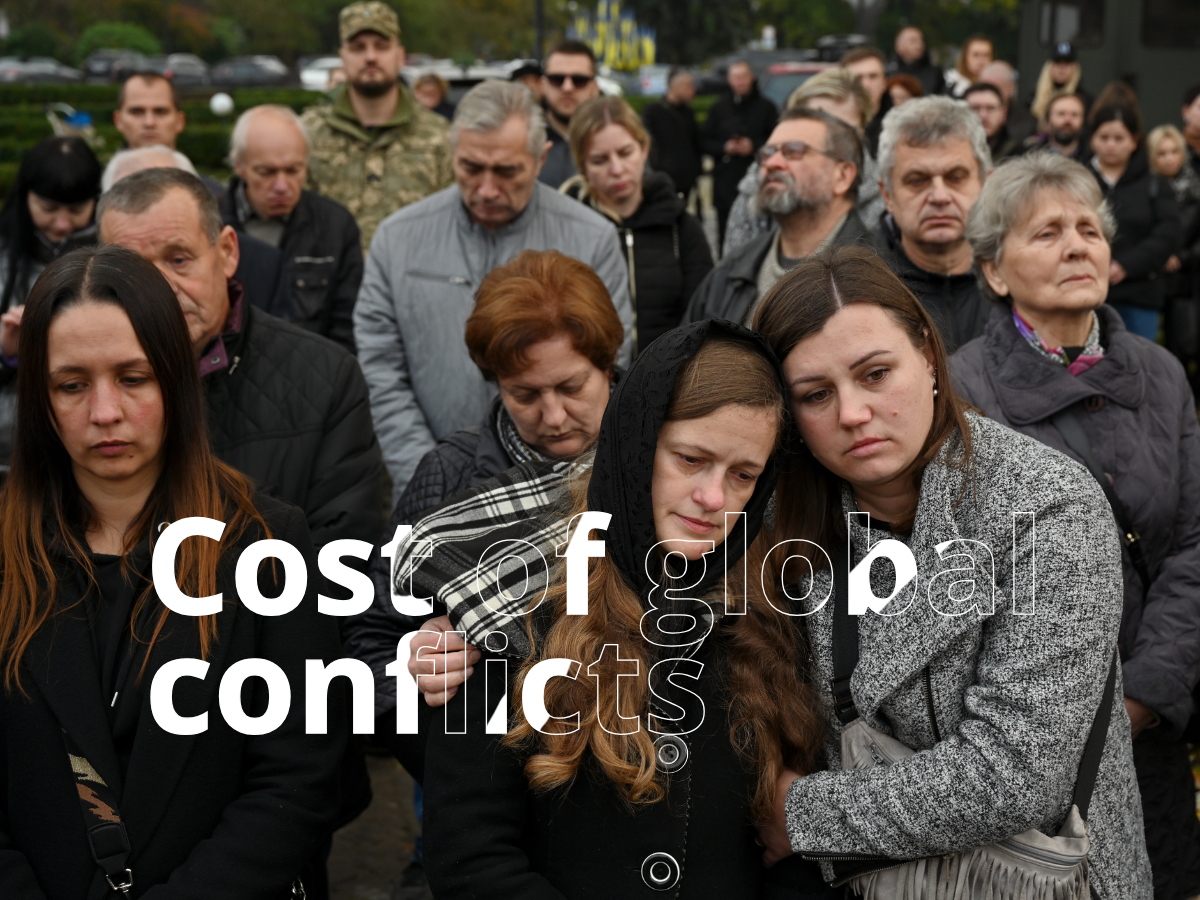
Whether we talk about the deepening refugee crisis or the rise in global prices of oil and fuel, the current battles in the Middle East and other parts of the world show that conflicts do not stay within borders and their consequences are felt all around the globe. Wars affect civilians, the economy, the environment, and health systems. Moreover, the concerning news about international security and the suffering of innocent civilians worsens the well-being of many of us. Therefore, at the end of this article, you can read our advice on how to protect yourself from the constant waves of bad news.
Humanitarian impacts
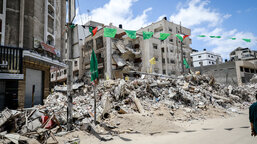
According to the UN, in the middle of 2025, 117.3 million people were on the run. The situation has been recently escalating in the Middle East, where more than 4 million people have left their homes since the beginning of March. In Lebanon only, the number of refugees has exceeded 1.2 million. Caritas Czech Republic supports Caritas Lebanon, which provides shelter, food, drinking water, and medical assistance to displaced families. During March, it helped 221,001 people.
An unstable situation persists in Haiti, where political chaos has continued since 2021. Gang violence against civilians worsens the humanitarian crisis, and so far, more than 1.4 million people have been forced to leave their homes. In Mali, over 400,000 people have been displaced due to internal political tensions. And we could discuss many more humanitarian crises.

For example, in Ukraine or Iran, attacks destroy civilian infrastructure, which is against international law. Hospitals, schools, roads, and other key public service are targeted disrupting the delivery of basic necessities such as drinking water, food, medicine, and electricity. For instance, residents of Yemen also continue to live in extreme conditions. In the country, more than 22 million people, roughly half the population, are expected to require humanitarian assistance this year.
Ecological impacts
Armed conflicts also leave a long-term toxic legacy, which includes damaged natural resources, soil and water contamination, and extensive destruction of ecosystems. Moreover, militaries account for 5.5% of global greenhouse gas emissions, a share that current conflicts increase. According to a British study, the war in Gaza released approximately 33 million tonnes of carbon dioxide into the atmosphere.
UN estimates that just mine clearance and unexploded ordnance removal in Ukraine will cost approximately 34.6 billion dollars. Such a massive sum proves that armed conflicts have long-term, devastating impacts even after their resolutions.
Health impacts
Armed conflicts in affected regions severely disrupt healthcare services. Hospitals are destroyed or overwhelmed, medication supplies are inconsistent, and poor hygiene conditions lead to a rapid spread of diseases. The World Health Organisation (WHO) warns that in countries affected by conflicts, up to 70% of disease cases have epidemic potential. In Sudan, for instance, 21 million people remain without adequate medical care.

The situation is often worsen by delays in treating non-acute or chronic diseases, which raises the risk of complications and death. Furthermore, conflicts affect the mental health of local residents, including children, the elderly, and other vulnerable social groups, who experience long-term stress, fear, and insecurity.
Economic impacts
Millions of civilians lose their jobs and livelihoods due to displacement, collapse of the local economy, or disrupted agricultural production. Additionally, countries at war are unable to create enough job opportunities to keep pace with rapid population growth, which worsens poverty and social inequality. According to the World Bank, more than one billion people live in energy poverty, meaning their households lack sufficient funds to meet their basic energy needs (such as heating, hot water, cooling, lighting, and power for appliances).
Conflicts in key energy-producing regions are also pushing up the prices of oil and other commodities, impacting the global economy. According to the International Energy Agency (IEA), for example, the war in the Middle East is causing the most significant supply disruption in the history of the global oil market. Disrupted transport routes and increasing uncertainty are both making shipping more costly and slow, which businesses and consumers around the world are starting to notice. If the conflict persists, the pressure on energy prices and essential raw materials will intensify.
Social impacts
Entire communities lose stability, income, and support systems. Mass migration may deepen internal political disputes and intensify social tensions among host communities. Up to 85 million children worldwide are out of school due to conflicts. In war zones, cases of gender-based violence increase, as seen in countries like Syria. In Myanmar, women and girls face violence, trafficking, and early marriage.

Long-term impacts
Regional conflicts leave deep scars on the lives of entire generations. People face trauma or deal with the consequences of unfulfilled educational opportunities. Those fleeing violence often encounter long-term insecurity and daily instability. Disrupted families and community bonds weaken social cohesion and increase reliance on humanitarian aid, which for many becomes their only support.
On top of everything, extensive damage to infrastructure hampers the efforts to rebuild. For example, according to the UN, only the reconstruction of Gaza is expected to cost approximately 70 billion dollars.
How to protect your health in the world of bad news?
Initially, we should consider how much information we actually need and set our boundaries accordingly. It is beneficial to have specific days and times dedicated to catching up with the news, avoiding it immediately after waking or just before going to sleep. Additionally, it is important to seek out positive news, for example, by following outlets and media that share uplifting stories.
You can also create calming zones at home, where you limit the use of your phone, TV, or radio, reducing your information intake. Turn off notifications, delete the apps that drain you the most, and mute accounts that give you anxiety. Use a digital alarm clock and cherish moments without your phone. During rest and sleep, leave it in another room.
A sense of usefulness can ease feelings of helplessness. Seek out opportunities that allow you to know you have helped make this world or your surroundings a better place. Support an organisation, sign a petition, or become a volunteer. If you find a topic that resonates with you, we recommend carefully searching for information about it and verifying its accuracy at the same time.
Physical activity and caring for your body also greatly support your mental well-being. According to a Harvard study, each significant increase in physical activity lowers the risk of developing depression by 26%. Listen to your body and allow it to rest. Try a new hobby and return to an old one.
And do not forget to seek support within your own community. Visit your family, meet your friends, and share what is on your mind. And if you feel like the weight on your shoulders is too heavy, ask for professional help.