


March 30, 2026
News

The devastating war in Gaza has been ongoing since October 2023. It has left behind an indescribable level of destruction and suffering and has had an unprecedented impact on the civilian population there. The bombing and fighting in this enclosed strip of land have caused one of the greatest humanitarian disasters of our time, which continues despite the ceasefire from October 2025. What is the situation on the ground? What is behind the conflict?
DONATE AND HELP CIVILIANS IN GAZA
1. What triggered the recent conflict?
The tragic escalation of the conflict between Hamas and Israel was triggered by a brutal attack by Hamas fighters on Israel on 7th October 2023, in which about 1,200 people were murdered. In addition, over 200 people were taken hostage and dragged to the Gaza Strip.
Israel's intense retaliation aiming to defeat Hamas has had a disastrous impact on the civilian population of Gaza, where 2.1 million people live in a strip of isolated land smaller than Prague. Moreover, a wall and barbed wire fence off the entire area, and there is no escape from it.
The current war is an escalation of a decades-long conflict that was sparked by the establishment of the State of Israel in the formerly Palestinian territories and the subsequent forcible displacement of Palestinians from their homes.

Photo: Gaza after bombing (Author: Caritas Jerusalem)
In 2007, the Hamas organisation took control of the Gaza Strip, overthrowing the Palestinian Authority that still rules in the West Bank. Since then, the Gaza Strip has been under a long-term land, air and sea blockade by Israel. This is despite calls from the UN and human rights organisations, which have warned of the devastating impact of the embargo on civilian lives. Between 2008 and 2023, prior to the current conflict, air strikes in the occupied territories killed 6,407 Palestinians, including 5,360 in Gaza, according to the UN. During the same period, 308 Israelis were killed.
2. What is the current humanitarian situation in the Gaza Strip?
In almost two and a half years, the war has caused an unprecedented number of civilian casualties, especially in Gaza. More than 72,000 people have been killed, and another 171,000 have suffered injuries. Most of the victims are civilians, primarily women, children, and the elderly. The military operations have displaced 1.9 million people, 90% of the total population of Gaza. 1.2 million of them are children. But these people have no safe place to hide. Nowhere is safe in Gaza. Moreover, many families have had to flee repeatedly in a desperate attempt to reduce the risk of imminent death at least.
The almost complete displacement, coupled with the limited supply of humanitarian aid, has created a humanitarian disaster of enormous proportions in Gaza. People are crowded in inhumane conditions in makeshift shelters, which are in short supply. They lack access to even such basic needs as drinking water, food, sanitation and health care. In August 2025, a famine was confirmed in northern Gaza. Thanks to the ceasefire, the situation in Gaza has slightly improved, and the supply of food has increased, but a large part of the population remains at risk.The latest UN update states that 77% of the population faces a critical level of acute food insecurity.
Because of these dire conditions, there is a massive spread of infectious diseases. 83% of displacement sites have a serious rodent problem, and every fourth one lacks latrines entirely. Bad hygiene conditions, together with starvation and the lack of health care, mean that many Palestinians, including children, are dying from easily treatable diseases. According to the Nutrition Cluster study, for example, it is expected that 246,000 children will require treatment next year due to acute malnutrition. Not every child will get this treatment.
The current escalation of the safety situation in the Middle East also affects the deliveries of humanitarian aid to Gaza and diverts attention away from the conflict. There is a risk that the tragic conditions of people in Gaza will deepen again.
3. Who are the people who live in Gaza?
Gaza is part of the occupied Palestinian territories, along with the West Bank. The vast majority of Palestinians living in Gaza are refugees who had been forced from their homes after the establishment of the State of Israel in 1948, and their descendants. Many of them still hope to return home. Even before the escalation in October 2023, almost half of Gaza's population lived in refugee camps.
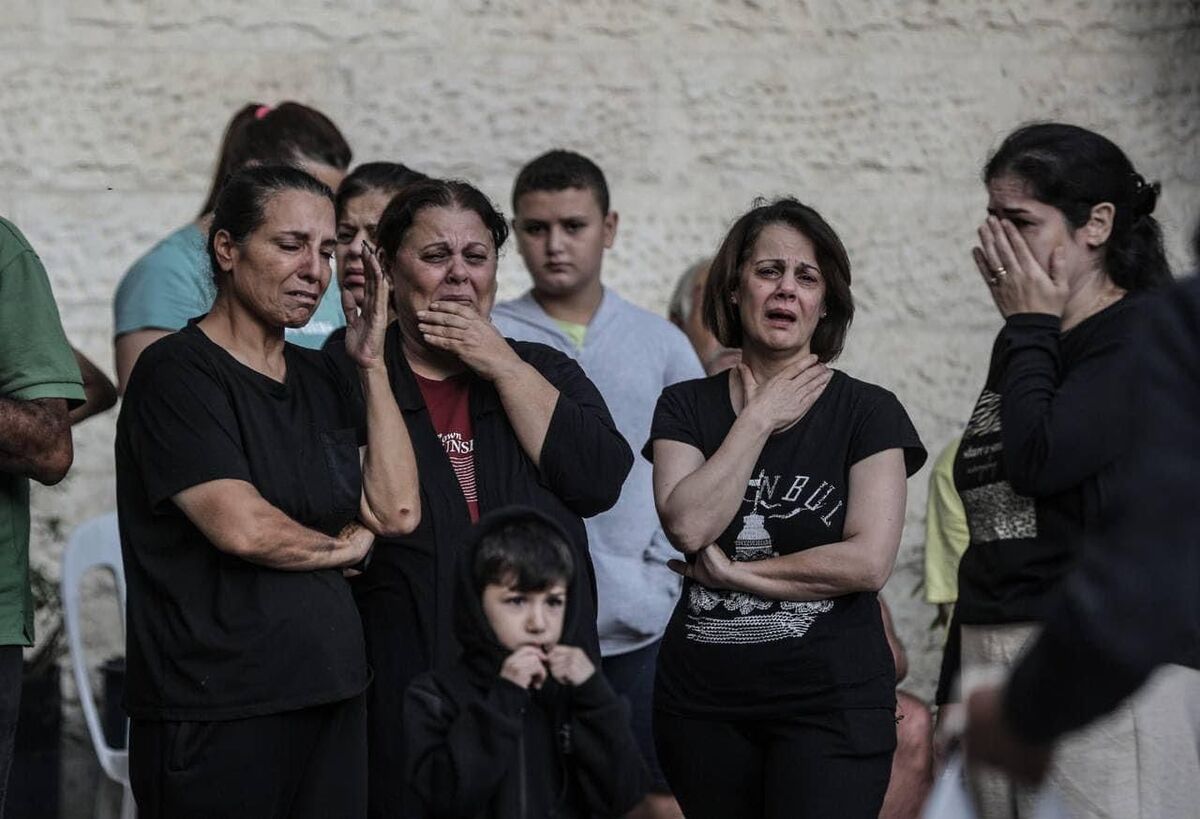
Photo: Funeral of victims of St. Porphyrios church shelling in Gaza (Author: Caritas Jerusalem)
The needs of the local population are long unmet and growing. More than 80% of Gaza's population lives in extreme poverty as a result of the war, the blockade and the economic devastation. 90% of local businesses were destroyed or damaged, and almost everyone is reliant on humanitarian aid. Even before the war, the unemployment rate was one of the highest in the world, reaching up to 79%. Since the beginning of the war, the statistics has been increasing. Moreover, half of Gaza's population are children and teenagers, with up to 45% under the age of 14. Most young people have never left this narrow strip of land and have little or no prospect of a better future or access beyond the Gaza Strip.
Accoring to UN, the current war has turned Gaza into a „dead zone“. For instance, 81% of all buildings were destroyed or damaged, along with 89% of facilities necessary for ensuring the access to drinking water, and 77% of roads. The restoration will take decades.
4. Where are Gaza´s safe zones?
No place in Gaza is safe. At the height of the fighting, intense attacks were carried out across the whole territory. They did not spare hospitals, schools, churches, or other civilian buildings. During the ceasefire, the intensity has lowered, however, even in times when there should be no fighting, the attacks persist, and the residents remain exposed to uncertainty.
Back in October 2023, our colleague from Caritas Jerusalem, Viola, and her young daughter and husband lost their lives in the airstrike on St Porphyrios Church. Our other colleague, Issam, was killed along with his two sons in an attack on a residential house in a supposedly safe part of Gaza.
Over the two years of the conflict, Palestinians were gradually pushed into seemingly safer areas in the south, but even there, no safety existed. Repeated Israeli offensives on Rafah forced Palestinians to flee even from the south.
5. What is the long-term situation in Gaza?
The Gaza Strip is often compared to an "open-air prison". This densely populated enclave is fenced off by barbed wire and a wall that is forbidden to approach closer than 100 metres. During the war, Israel closed the border crossings with Gaza completely for people and for goods. Deliveries of humanitarian aid were often severely limited. Hope that it would be possible to leave the Gaza Strip emerged with the ceasefire and the associated opening of the Rafah crossing at the beginning of February 2026, when a limited number of people were allowed to leave the Strip for medical treatment abroad, which about 20,000 people in Gaza have been waiting for.
 Photo: Delivering humanitarian aid to Gaza (Author: Catholic Relief Services)
The needs of people in Gaza had already been unmet for years before the current escalation of the conflict; schools were overcrowded, and the capacity of basic infrastructure such as electricity, water, sanitation and social services was inadequate. Electricity was only available for a few hours a day, and many people lacked sufficient access to clean water. The vast majority of Gaza's population was thus dependent on humanitarian aid. Israel has been controlling the fishing industry long-term, and because of the blockade and dense population, people in Gaza are unable to grow enough food.
6. How does the current war in Gaza affect the region?
The current war in Gaza has had a significant impact on the situation in the West Bank. The closures and blockades of Palestinian towns, as well as the absence of tourists and pilgrims, spell disaster for the people there. People have lost their primary source of income and the ability to continue to earn a living. In addition, hundreds of families in the West Bank have been forced to flee their homes, and the level of violence by settlers and the Israeli army against Palestinians has increased dramatically.
In the context of regional clashes, the conflict in Gaza is negatively affecting the wider Middle East with its humanitarian, safety and economic impacts. The situation in Gaza can be seen as a catalyst for the interconnected fronts in Iran and Lebanon, contributing to the gradual breakdown of fragile relations in the Middle East.
7. How is Caritas helping in Gaza?
Gaza continues to face catastrophic conditions. Therefore, Caritas operates on site.
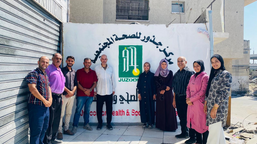
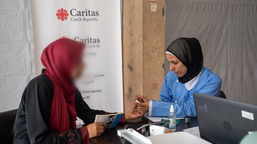
For example, we helped Aida and her son by ensuring healthcare, medication and psychosocial support. We have been working with Caritas Jerusalem which provides basic healthcare directly in Gaza. Caritas Czech Republic is one of few organisations who has its own team in Gaza focusing on psychosocial assistance and case management. Together with local organisation SAWA, we assist through a crisis helpline as well.
Caritas Czech Republic has long called for a ceasefire compliance and the provision of adequate humanitarian aid.
We thank all those working with us to help civilians in Gaza.
DONATE AND HELP CIVILIANS IN GAZA