


June 4, 2026
News
Armed conflicts, ceasefires during which civilians continue to die, and drone attacks in previously safe areas. At the moment, there are more active conflicts than at any time since the end of World War II. Half of those conflicts are taking place in Africa. Their consequences do not affect only the participating states, their residents or neighbouring countries; they impact the whole world, our economy, environment and peace of mind. But what crises and conflicts stay out of the media spotlight? We bring you six examples in this article.
Currently, 239 million people worldwide need humanitarian aid. That is three times the population of Germany. More than 117 million people are forced to leave their homes. This is happening at a time when financial support for humanitarian work is decreasing.
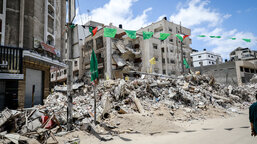
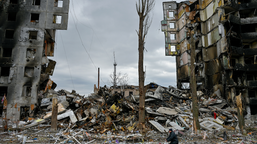
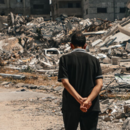
As individuals, we can only process a limited amount of information. We follow conflicts and crises that are geographically, culturally or economically close to us, or those covered by mainstream media. Moreover, conflicts within a single country are often overlooked more than wars between two or more countries. In the Czech context, we hear and read about the war in Ukraine, the conflict between Israel and Hamas in Gaza, and Hezbollah in Lebanon. These are places where Caritas Czech Republic also helps. In recent months, the tensions in the Middle East have also had an economic impact on us, including attacks involving the United States, Iran, and other actors in the region. We are less able to explain what has been happening in Mali, Sudan, Haiti, the Democratic Republic of the Congo, Ethiopia, Afghanistan, Yemen, or Myanmar. And the list goes on.
1. Sudan
The crisis in Sudan is often described as one of the worst humanitarian catastrophes of our time. A conflict that began more than three years ago has left over 30 million people in need. The original clash between the army and paramilitary forces has escalated into a large-scale armed conflict. The fighting is accompanied by violence against civilians, bombardment, ethnic attacks, kidnapping and sexual violence.
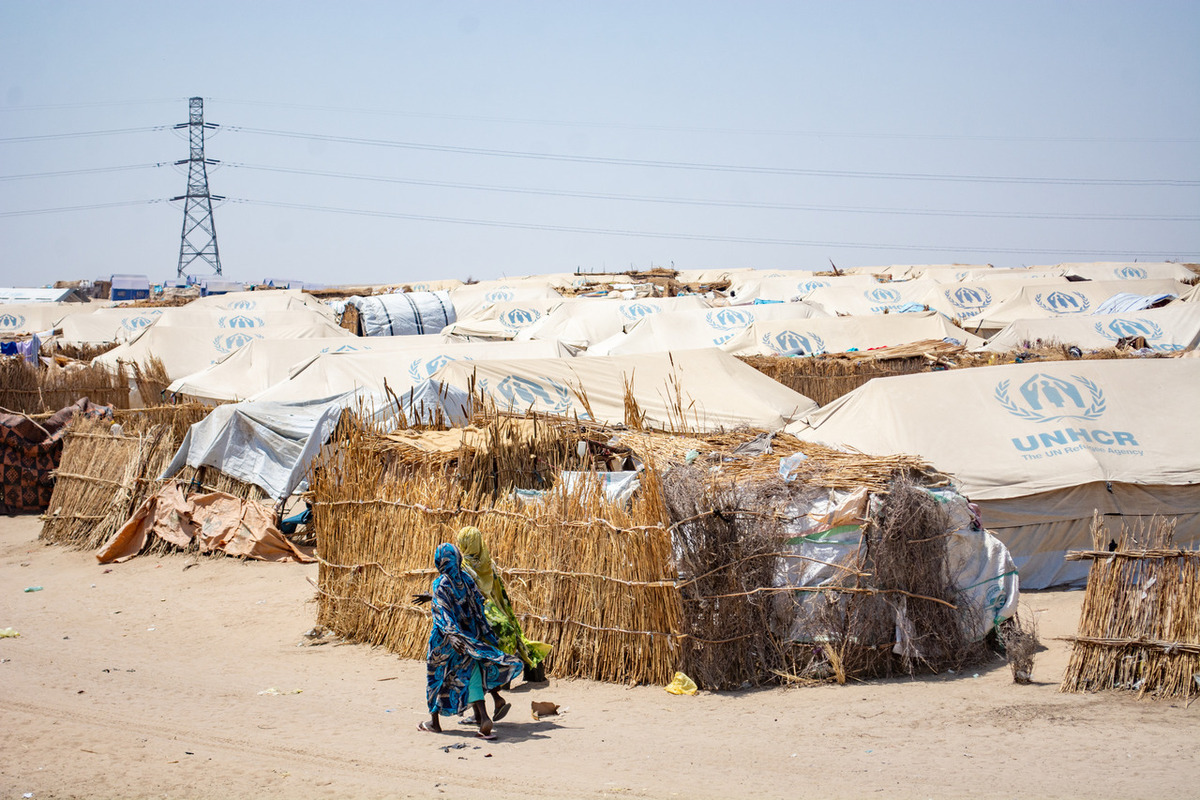
Photo: Tent camp in Sudan (author: CAFOD)
In recent months, the world has been informed about the brutal massacres in the city of Al-Fashir. An independent UN observation confirmed that the suffering of local people shows signs of genocide. The conflict has caused massive displacement, forcing 14 million people from their homes, of whom 4 million have fled to neighbouring countries. Residents continue to face poor hygiene, illness, malnutrition, and a lack of healthcare. International organisations repeatedly call for the protection of civilians and for access to humanitarian aid.
2. Mali
The conflict in Mali has been ongoing since 2012 and is among the most significant in Africa. The main parties are the ruling military junta, jihadists linked to al-Qaeda, and Tuareg separatists. The fighting is concentrated primarily in the north of the country and has led to displacement and the collapse of healthcare, services and education. Armed groups continue to carry out coordinated attacks. Traffic and supply routes are blocked, and some parts of the country are not under the government control. The conflict is also significant from a geopolitical perspective. The Sahel region, to which Mali also belongs, is often considered the “epicentre of terrorism”, from where instability spreads to surrounding countries.
Here, more than 5 million residents require humanitarian assistance. The most vulnerable groups, primarily women and children, face a heightened risk of violence and exploitation. Moreover, the security situation has deteriorated over the past months, complicating access to humanitarian aid.
3. Yemen
The civil war in Yemen, which began in 2014, has evolved into a broader geopolitical clash: between Saudi Arabia, which supports the government's military coalition, and Iran, which backs the Yemeni rebels (the Houthis). Other separatist and armed groups further complicate the situation. The conflict's global significance is underscored by Houthi attacks on ships in the Red Sea.
Residents face extreme poverty, hunger, and the collapse of basic services. About half the population requires humanitarian aid, and millions deal with food insecurity and malnutrition. The healthcare system often fails, and epidemics of cholera and measles are common. As in other conflicts, women and children face a heightened risk of violence. Yemen remains one of the world’s most overlooked crises.
4. Haiti
The crisis in Haiti is one of the most significant in the Western Hemisphere. The conflict stems from a combination of long-term political instability, poverty and the collapse of public institutions, especially after the assassination of Haiti’s president in 2021. Armed gangs have gradually taken control of a large part of the country. Civilians are subjected to violence, and gangs control key transport routes and economic resources.
These factors, common natural disasters, and dependence on aid continue to hinder the country’s stabilisation. Over 6 million residents need assistance, and many face food insecurity. The healthcare system operates on the edge of collapse. Diseases are spreading, and there is a lack of water, too. Access to humanitarian aid is threatened by instability, attacks, and violence. Everyday survival is becoming more difficult for local people.
5. Myanmar
A brief period of political reforms was ended by a military coup in 2021, when the army (Tatmadaw) overthrew the democratically elected government. The conflict has since evolved into a civil war, with nearly one-third of the population (over 16 million people) in need of humanitarian assistance, according to the UN. The situation was further worsened by a powerful earthquake in March 2025, which destroyed tens of thousands of homes and infrastructure.
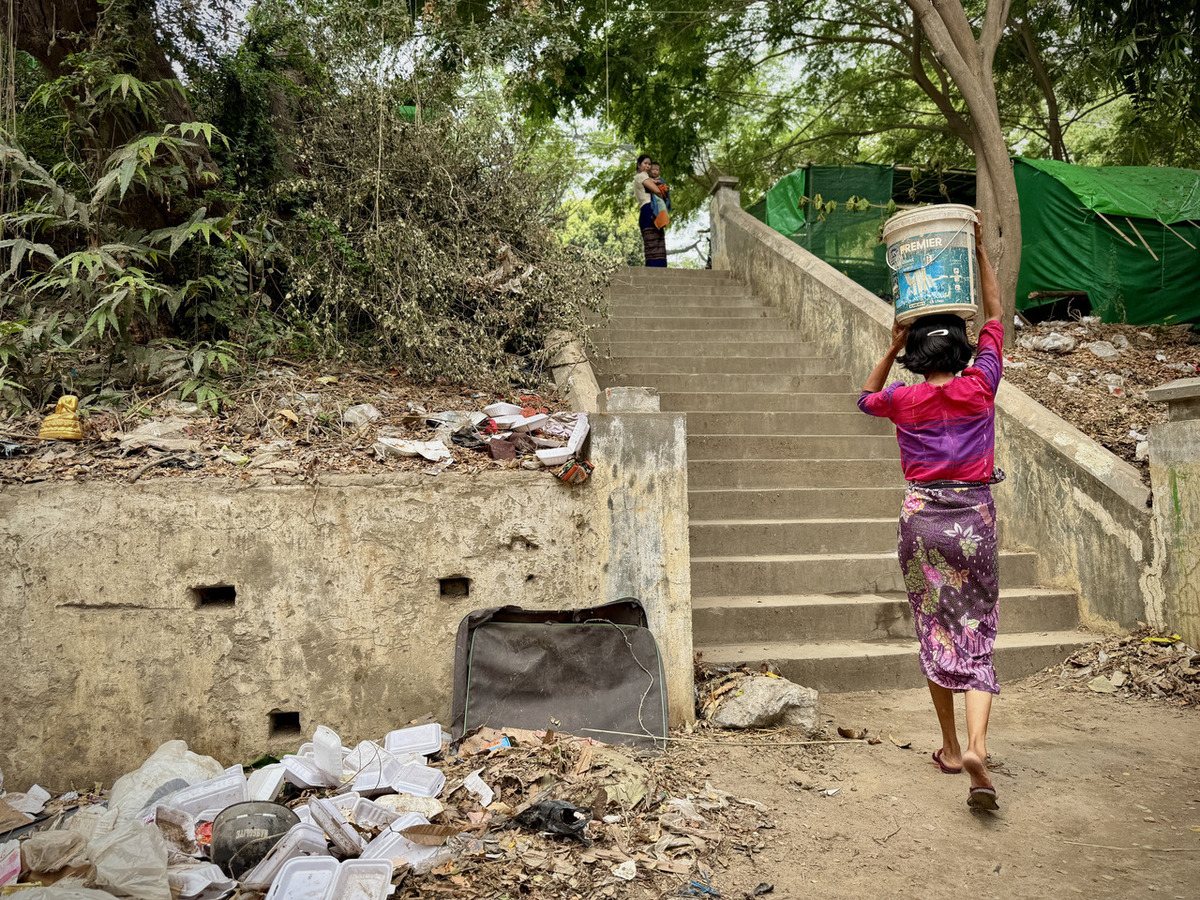
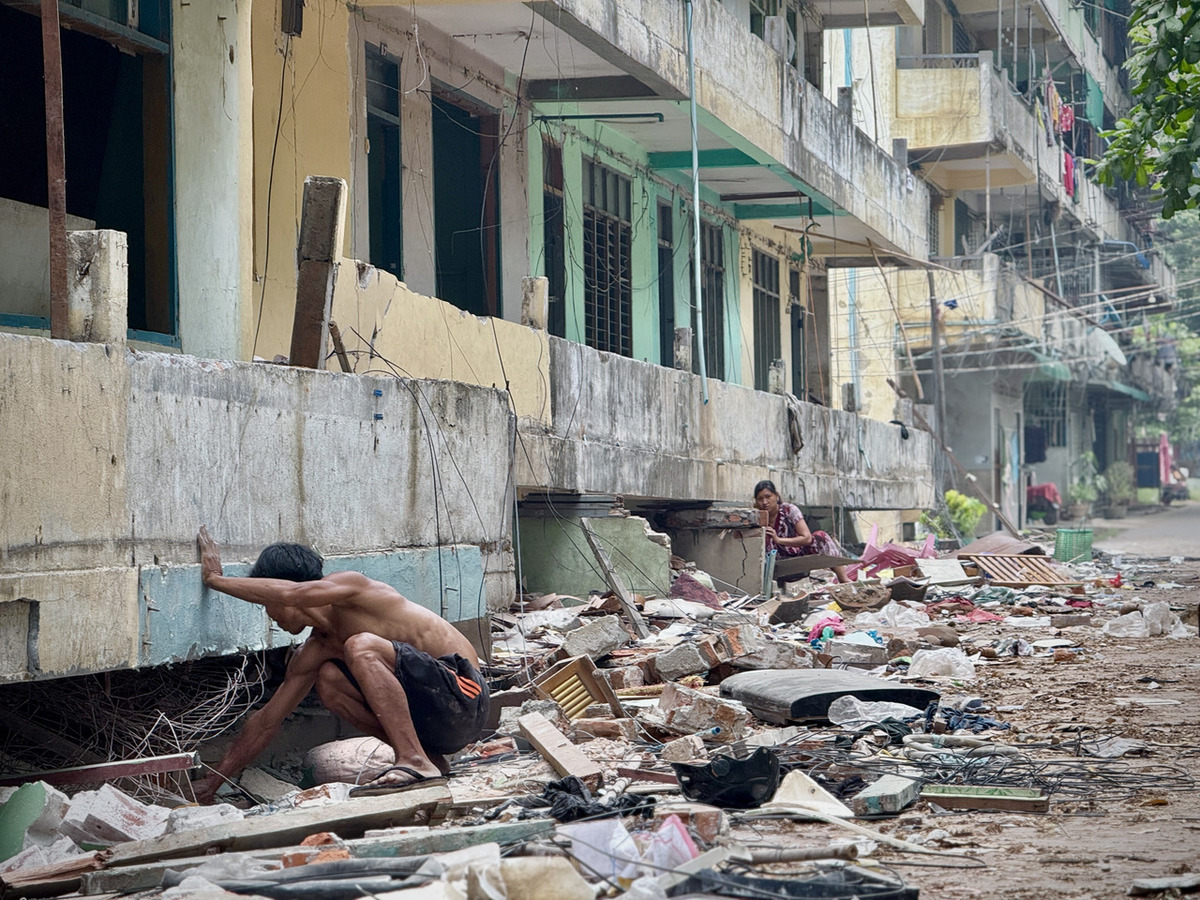
Photo: Earthquake in Myanmar (author: Catholic Relief Services)
Approximately 4 million people live in provisional conditions without sufficient access to food, water, and healthcare. The crisis in Myanmar has far deeper roots, though; decades of military rule, ethnic conflicts and purges, and power struggles have led to a deepening economic collapse and extremely harsh living conditions.
6. Cuts in humanitarian aid
A less visible but crucial crisis is the funding cuts for humanitarian aid. This affects not only the countries mentioned above but also others, more or less known. The number of conflicts is rising, we face global instability, and the need for help is increasing. However, international and local organisations are facing major cuts.
The reductions were also made in the Czech Republic , where funding for humanitarian aid has been cut by 70% this year. This significantly limits the ability to respond to crises and disasters. For many humanitarian organisations, it means having to seek funding elsewhere, but above all, it means that aid will not reach those who need it. This assistance is often what stands between them and hunger, reuniting with loved ones, a roof over their heads, or access to medical care.
Caritas Czech Republic is part of the global Caritas Internationalis network. Local Caritas organisations are often the first to respond, thanks in part to their knowledge of the local environment and people’s needs. Our strength lies in cooperation and in our ability to provide assistance worldwide. In 2025, Caritas Czech Republic supported more than 80,000 people in 10 countries around the world. Thank you for helping alongside us.