


August 17, 2026
News
Humanitarian workers help people overcome the most excruciating life moments, while risking their own lives. In 2003, 22 humanitarian workers were killed in a bombing attack in Baghdad. Every year on 19 August, we commemorate their memory, as well as the work of hundreds of thousands of other humanitarian workers around the world. This year, we prepared short testimonies for you, written by our employees from the Czech Republic, Ukraine and Zambia. Their work supports those who often perceive humanitarian help as their only source of hope.
I am glad that humanitarian workers around the world have a day dedicated to recognising their work. They help people in their most difficult moments and often put their own lives at risk in the process, whether dealing with natural disasters or crises caused by conflict. We should not forget their dedication and the vital work they do.
Hana Štindl Vitnerová, Head of the Humanitarian Aid and Development Cooperation Department
FACT: Between 2023 and 2025, over 1,000 humanitarian workers were killed, more than half of them in Gaza and the West Bank. Other victims were reported, for example, in Sudan, South Sudan, Ukraine, or the Democratic Republic of the Congo. (Source – OCHA)
For me, humanitarian aid is not just about ensuring survival. It is about restoring dignity, reviving strength, and enabling people to get back on their feet once they feel there is no hope left. I recall a family-owned enterprise from Sloviansk that, after relocating, successfully restored and expanded its production. Oleksandr and Svitlana’s family ran a successful business making tandoors, ceramic ovens for cooking. These ovens were crafted from local clay and sold worldwide. The war forced the family to flee and move to western Ukraine. However, they did not give up. They adapted their production process to the new raw materials, won a grant competition, and, using the funds we provided, purchased equipment to increase their capacity. Thanks to this, the whole family is now self-sufficient, contributing to the local economy.
Nataly Matskova, Country Director of Caritas Czech Republic in Ukraine
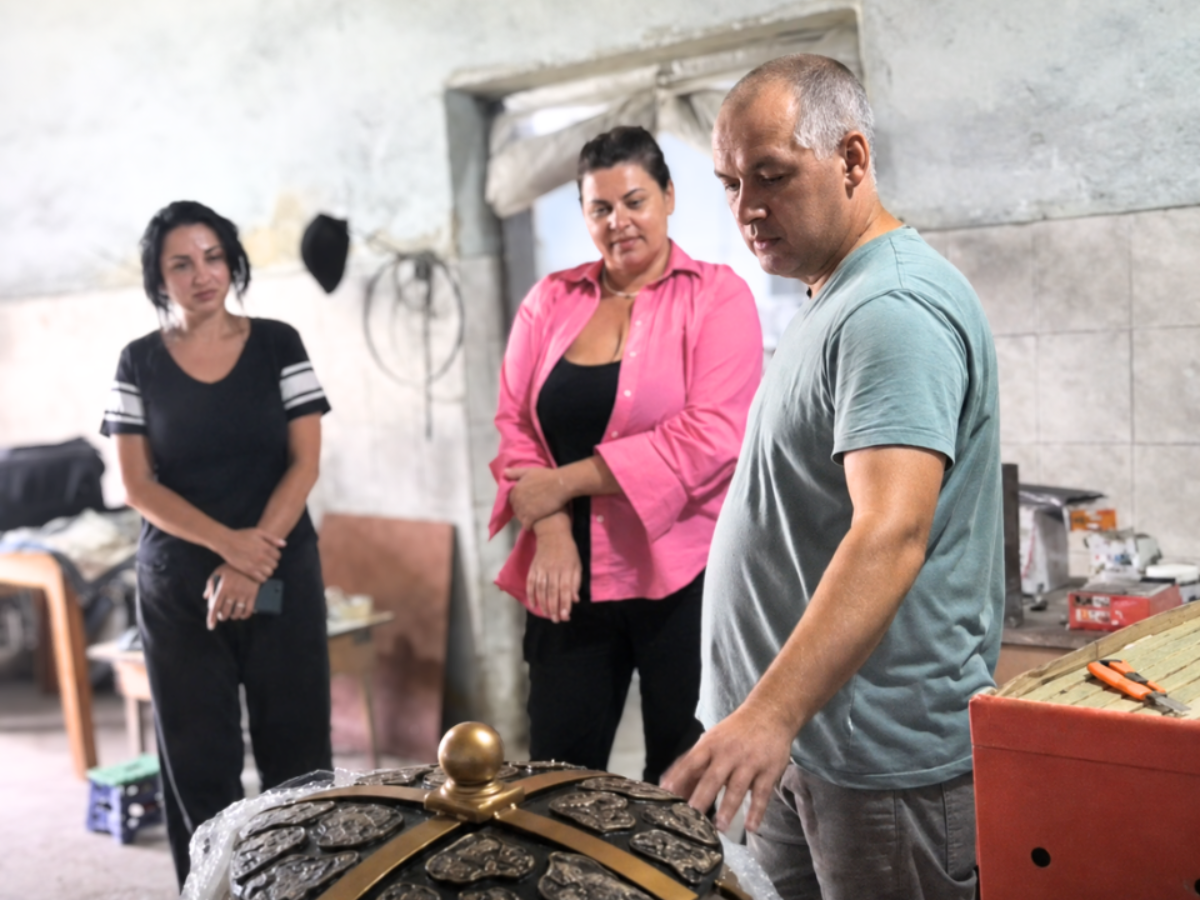
Photo: After relocating to western Ukraine, the family successfully started its business again
FACT: By the end of May 2026, over 252 million people needed humanitarian assistance. (Source – UN)
During my work with refugees and host communities in Mayukwayukwa, one thing that has stayed with me is seeing how people can turn small opportunities into meaningful livelihoods. I have witnessed farmers start with very limited resources and, through training, mentorship, and support, begin producing different crops and engaging in value chains that provide food and income for their families while also connecting them to local markets. For me, the most rewarding part is knowing that the support we provide can help people move from dependence towards greater self-reliance and resilience. These moments continue to motivate me in my work and remind me why supporting refugees and host communities matters.
Emmanuel Kasanga, Project Officer of Caritas Czech Republic at the refugee camp in Mayukwayukwa
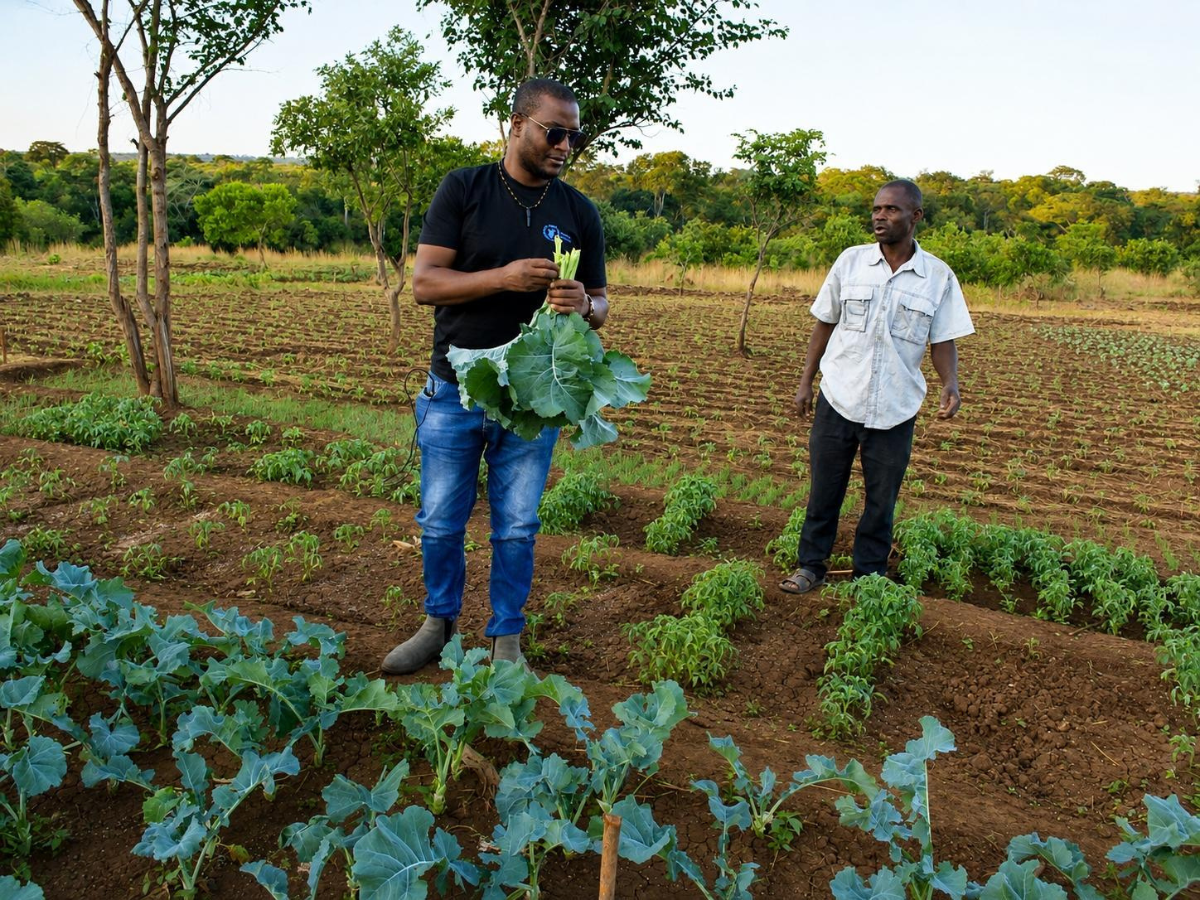 Photo: Emmanuel helps refugees become self-sufficient
FACT: Caritas Czech Republic provides humanitarian and development aid. We focus our humanitarian activities on areas affected by armed conflicts – primarily Ukraine and the Gaza Strip. Moreover, we support internally displaced persons in Lebanon and work in refugee camps in Zambia. We also provide humanitarian aid in cases of natural disasters, for example, during the recent earthquakes in Venezuela.
As a Country Programme Coordinator for Ukraine and the Middle East, I am in a close contact with our colleagues on the ground. They are the humanitarian workers who help their fellow citizens cope with the immense challenges of living in conflict zones. At the same time, they themselves live and work in these conditions while caring for their families. They often deal with a lack of Internet connection, spend sleepless nights worrying about air raids, or are simply exhausted by the constant stress and uncertainty that surrounds both their professional and personal lives. Yet despite these hardships, they continue to help others in every way they can.
Kristýna Kvasničková, County Programme Coordinator for Ukraine and the Middle East
FACT: Approximately 12% of humanitarian workers cope with the post-traumatic stress disorder. This is also why in Ukraine, we provide psychological support to our workers on the ground, which helps ease the burden of their demanding day-to-day work. (Source – Development Aid)
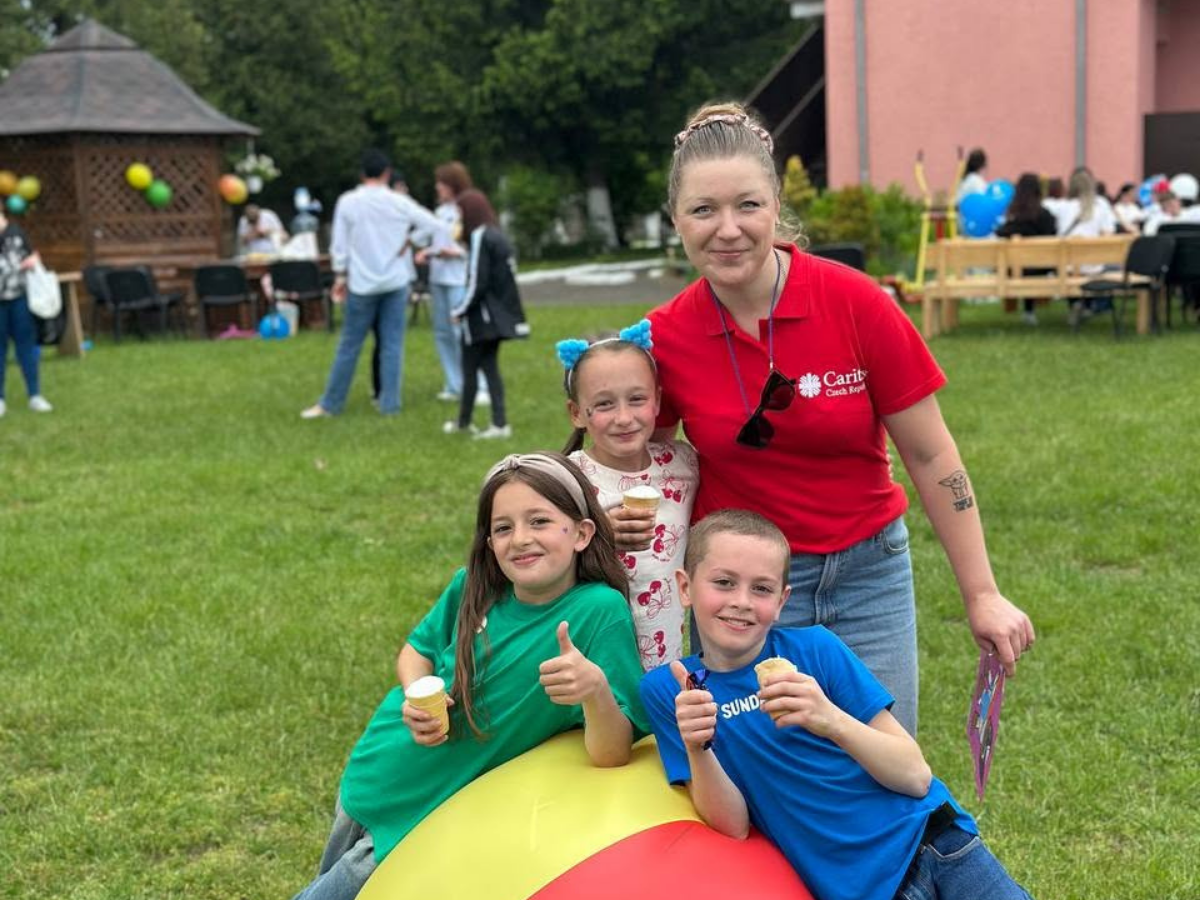
I am glad to be able to help people in their time of greatest need, and I’m proud of their resilience. Once, whilst we were setting up social housing for evacuated families in the Lviv region, we met Olga and her two children. Olga found the strength to pick herself up and keep caring for her children, despite her life being destroyed twice over. First, the family lost their home due to the occupation of their village in the Kherson region. With their last funds, Olga and her husband bought and renovated a house in the west of the country to protect their children. After the husband joined the army, the new home was destroyed by fire. The mother and her minor children were left homeless once again. Thanks to our joint efforts with our partners, the family received a fully furnished social housing flat. I’m delighted that Olga regained her strength here and can now work again and raise her children safely. This inspires me to carry on with my job!
Kristina Merdova, MEAL Assistant at Caritas Czech Republic in Ukraine
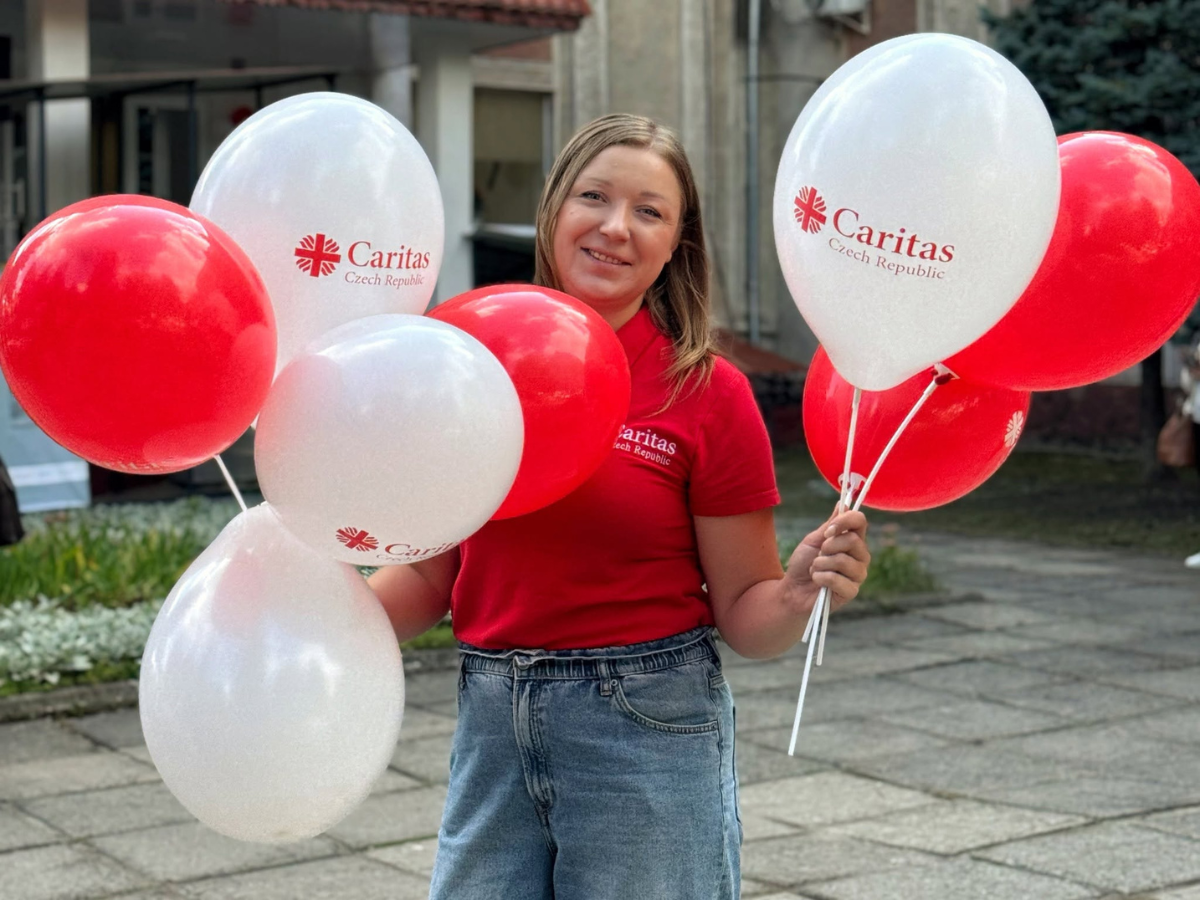
Photo: Kristina Merdova
FACT: In the first three months of 2026, the attacks on humanitarian workers in Ukraine surged by 38%. Six humanitarian workers were killed between January and June. (Source – OCHA)
During my work with refugees, I have met many people facing hardships that are difficult to comprehend, but one person who has stayed with me is an elderly widow I supported as a Livelihoods Mentor. When I first met her, she had lost hope and depended largely on support from her church and well-wishers to care for her family. After receiving training, a grant and regular mentoring, she started a small business selling dried foodstuffs and fresh vegetables. Gradually, her confidence grew, her business began to thrive, and, most importantly, her smile returned. She was eventually able to support her family independently, save money and even use her savings to cultivate maize on the farmland left by her late husband. Her journey reminded me that humanitarian work is not only about providing solutions—it is also about restoring hope, dignity and the confidence to believe in a better tomorrow.
Grace Banda, Project Coordinator of Caritas Czech Republic at the refugee camp in Makeni
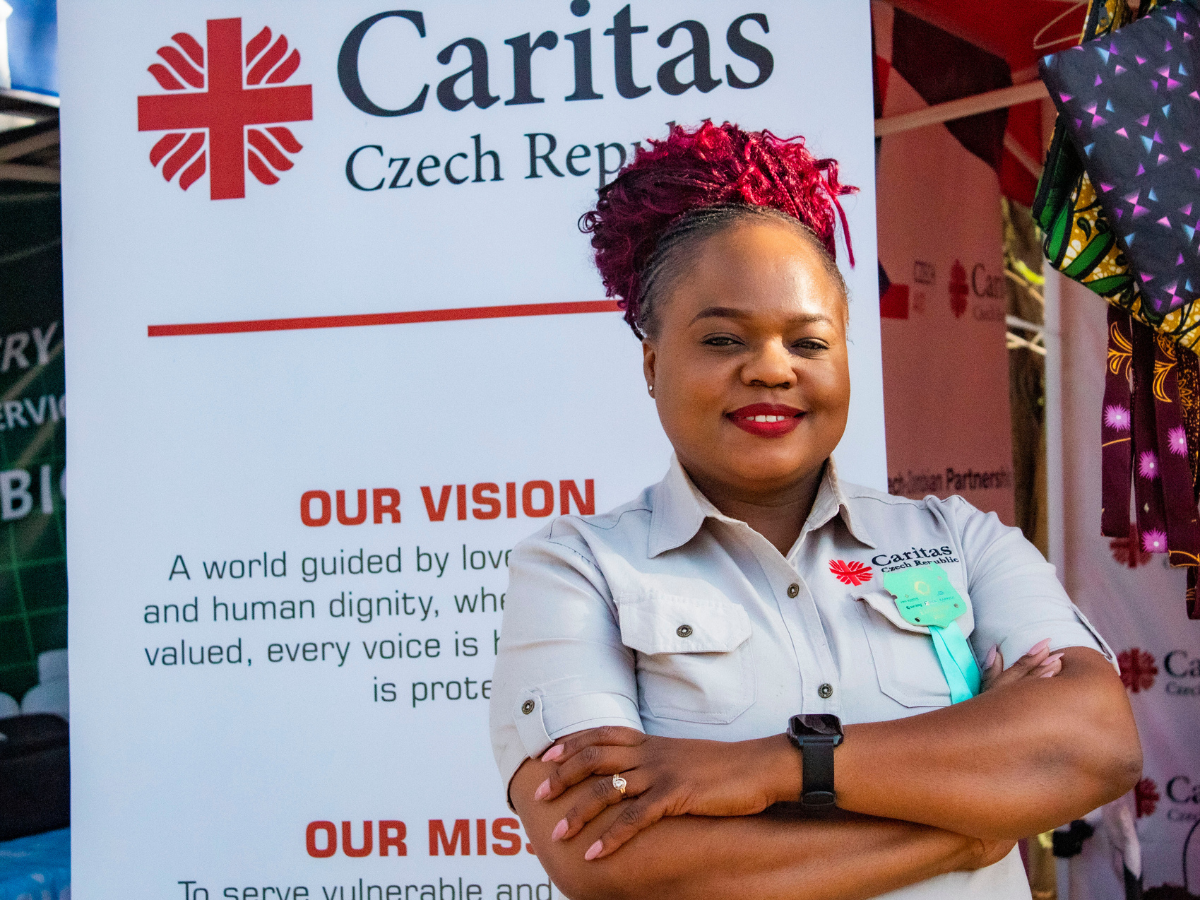
Photo: Grace Banda
FACT: Local staff account for 95% of all humanitarian worker casualties. Humanitarian workers face not only direct violence and abductions, but also attacks on healthcare facilities and humanitarian convoys. (Source – Development Aid)
Information and stories play a vital role in bridging the gap between people affected by natural disasters or conflicts and the wider public, helping others understand the scale and significance of humanitarian assistance. Humanitarian workers are often not only those providing aid, but also those who listen, document people’s experience, and bring their stories to the world. Through their work, we gain a deeper understanding of the realities people face and a greater appreciation of the importance of solidarity. On the occasion of World Humanitarian Day, I would like to thank them for their courage, dedication, and unwavering commitment every single day.
Zuzana Haniková, International Communications Manager
FACT: You can find more insights from the world of humanitarian aid in our article, 6 interesting facts about humanitarians.