


August 14, 2026
News

In the first half of the last century, Venezuela began to build its reputation as an oil empire. However, due to corruption and political instability, it gradually turned into a non-democratic country experiencing one of the worst humanitarian crises of our time. This year, the South American state has caught the attention of global media twice – once in January, when the United States arrested the authoritarian president Nicolás Maduro. Then in June, two strong earthquakes took the lives of more than 6,000 people and homes of nearly 20,000. You can read more about the historical context and the everyday life of people in Venezuela in this article, accompanied by the commentary of local journalist Alejandra Otero.
 Photo: Venezuela used to be an oil empire, now it goes through a humanitarian crisis (photo by Caritas Venezuela)
Oil as a gift and a curse
A significant moment of Venezuelan history was the discovery of oil deposits in the 1920s. The natural resources soon made the country one of the wealthiest in the region and the key world exporter. Venezuela also belonged among the founding states of the Organisation of the Petroleum Exporting Countries (OPEC).
However, the rise of the oil industry pushed other sectors of Venezuela's economy, particularly agriculture, into the background. The country became dependent on the income from oil export. The oil business initiated the spread of corruption and contributed to the weakening of Venezuelan democracy throughout the 20th century. Moreover, in the 1970s, the oil industry was nationalised.
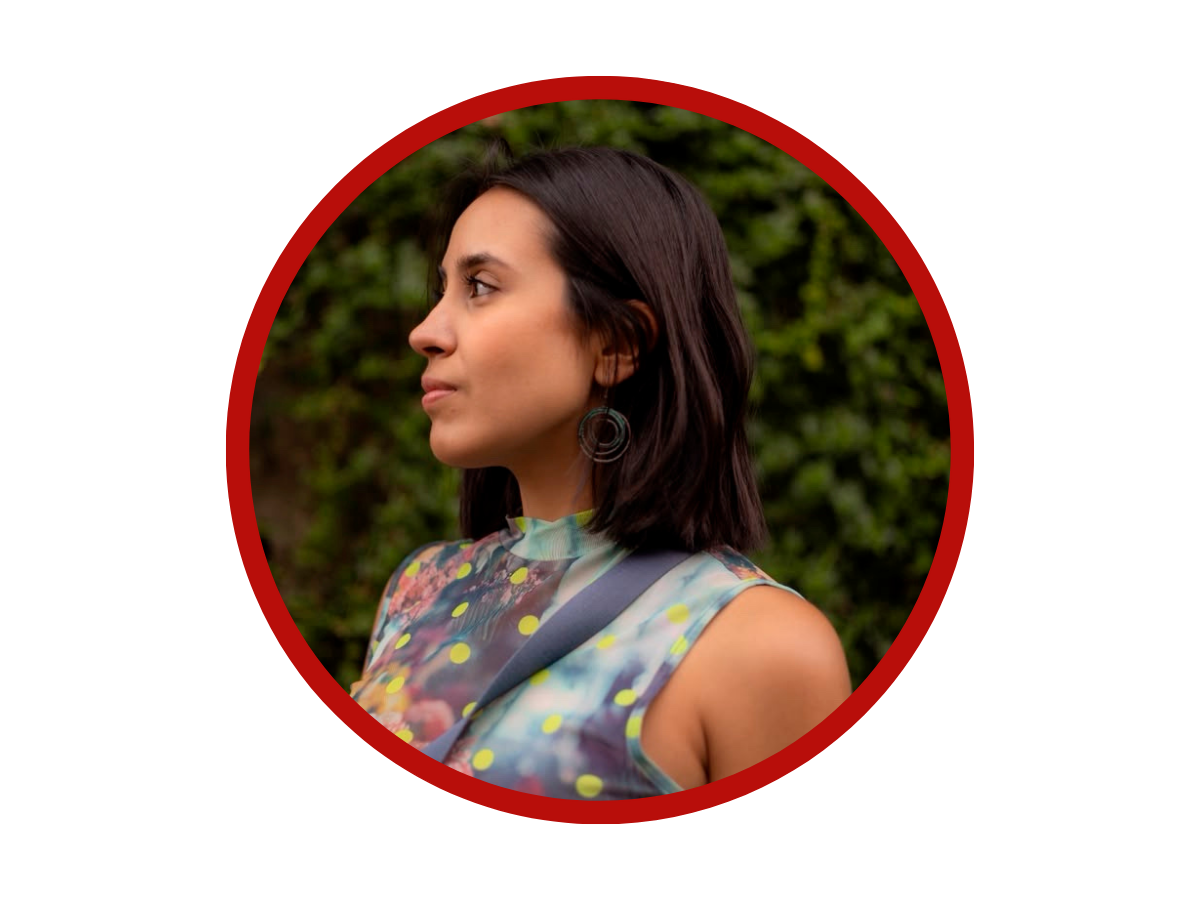
It has always been a rollercoaster of political events that do not give us Venezuelans, especially young people, a more stable ground to build something for our own,
says journalist Alejandra Otero.
President socialist
In 1992, there was an attempted military coup led by officer Hugo Chávez. The operation failed, and Chávez was imprisoned. However, he became popular among people, because he promoted the end of corruption and poverty. He was released from prison in 1994 and elected as president in the late 1990s.
Chávez was an admirer of Karl Marx and began to govern the state in accordance with the socialist ideology. His movement was called chavismo. He ensured his popularity by generous social benefits such as free education and healthcare. Behind these programmes though, he was gradually steering Venezuela towards dictatorship. During his rule, presidential powers were expanded and the bicameral parliament was replaced with a unicameral parliament. Chávez also oppressed the media.
President dictator
When Chávez died in 2013, Nicolás Maduro took over. At that time, the regime was way past the peak of its glory. “Chavismo was a really strong force at the beginning of the century, but everything that has happened in the country weakened the political force that they used to have,” Alejandra explains.
During Maduro's presidency, Venezuela faced international sanctions and fell into a deep economic and humanitarian crisis. The oil industry went into a decline, inflation surged, while poverty and crime increased. Households often lacked food or electricity. Nearly eight million people left the country, while almost seven million of them found shelter in Latin America and the Caribbean.
They fled the country because of the lack of opportunities here. A lot of corruption is still happening. And the economy is in shambles. Basically, it fluctuates so much that one day is different from the next day,
Alejandra describes the situation on the ground.
Maduro also further strengthened the authoritarian regime in Venezuela. He denied the election results in 2024 and imposed censorship. The opposition voices were suppressed and his critics faced persecution, imprisonment, and even torture.
Intervention of the United States in January 2026
In January 2026, the world learned about the military intervention of the United States in Venezuela, during which Maduro and his wife were arrested. Both were charged, among other offences, with narco-terrorism committed on the territory of the United States and were transferred to a US prison. The event triggered mixed reactions in both countries as well as around the globe. While some perceived the situation as an important step towards the democratisation of Venezuela, others criticised the United States for unjustified intrusion into the functioning of a sovereign state and argued that their actions were driven by American interests in Venezuela's oil resources.
The country's vice-president and oil minister became the country's interim president. During her inauguration, she spoke of Maduro and his wife as the hostages of the United States. “After the US invasion, a lot of political prisoners were released and a new government, that I think is like a rebranding of chavismo, installed in the country,” says Alejandra but adds that the change of government did not resolve the uncertainty of people in the country, did not stop the corruption, and did not come up with a solution for the lack of opportunities and inadequate access to public services.
In the regions of the country, people can go on for more than six hours without any power. We are an oil country, and people cannot put oil in their cars.
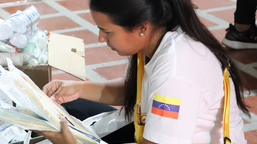
 Photo: Despite the change of government, people still live in insecurity (photo by Caritas Venezuela)
Earthquakes in June 2026
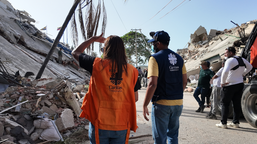
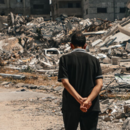
In June 2026, in less than one minute, two powerful earthquakes hit Venezuela, including the capital city of Caracas. The natural disaster affected lives of thousands who lost their homes and loved ones within just seconds. “It was a devastating earthquake that the government could not handle and could not provide a response to the citizens. So, the first three or four days, we were basically orphans,” explains Alejandra. In her view, people also lost their lives because the country lacked both rescue teams and the necessary equipment.
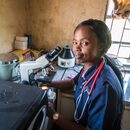
Therefore, the residents often had to look for their relatives under the rubble alone and could only count on foreign aid. Caritas Venezuela is one of the organisations supporting Venezuelans, providing them with food, drinking water, medicine, clothes, and psychological as well as spiritual assistance.


Photo: Caritas Venezuela is helping on the ground (photo by Caritas Venezuela)
Help the people in Venezuela
Caritas network supports its local organisation through, for example, public fundraising campaigns. Caritas Czech Republic has raised over 3 million Czech crowns so far. All donations are much appreciated. Thank you!