


October 9, 2026
News

Three years ago, Hamas militants attacked Israel. More than 1,200 people were killed and others were taken hostage. The fighting that followed in the Gaza Strip triggered one of the world's largest ongoing humanitarian crises. By June this year, the conflict in Gaza had claimed more than 74,000 lives and displaced two million people. The ceasefire signed a year ago was expected to bring an end to the violence and improve living conditions. Yet the situation in Gaza remains dire. So, what has really changed over the past year?
The first months after the ceasefire
The ceasefire between Israel and Hamas was agreed on 10 October 2025. Under the agreement, fighting was to stop, hostages held in Gaza and Palestinian prisoners were to be released, Israeli forces were to partially withdraw, and the flow of humanitarian aid into Gaza was to be expanded.
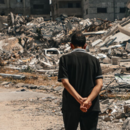
However, just a few days after the ceasefire came into effect, attacks continued. The security situation on the ground remained unstable. The ceasefire brought hope for improvement and many people began returning from the south to the north, but many families found that their homes were no longer standing when they returned.

Photo: People in Gaza lack access to basic needs, including food
The ceasefire enabled some humanitarian organisations to resume work in areas where hostilities were ongoing or where access was limited. A clinic run by Caritas Jerusalem with the support of Caritas Czech Republic was reopened in a new location in Al-Zawaida, in central Gaza. At the same time, our local partner quickly reactivated its emergency assistance network across the Gaza Strip. Within a matter of days, the Caritas Jerusalem team distributed 10,000 tins of infant formula to families with newborns and young children.
Towards the end of the year, Israel sought to restrict the activities of certain humanitarian organisations in Gaza and further complicated aid delivery. At the same time, the opening of the Zikim crossing in northern Gaza in November 2025 and the Rafah crossing in the south in early February 2026 helped improve the situation to some extent by facilitating increased humanitarian assistance and providing a limited opportunity for people to leave the Gaza Strip.
Conflict across the Middle East
The hope brought by the ceasefire did not last long. The situation in Gaza worsened once again as conflict escalated across the Middle East at the end of February. Border crossings were repeatedly closed, continuing to limit the delivery of humanitarian assistance and complicate reconstruction planning.
At one point, people were cut off from regular aid deliveries due to a complete blockade, despite being entirely dependent on them. At the same time, hospital operations were affected and the prices of basic food items rose sharply.
The current situation
Since the ceasefire was declared, more than 1,400 Palestinians have been killed. People continue to live under immediate threat due to ongoing attacks on civilians and civilian infrastructure. Most recently, on 5 October, five people were killed in a Christian neighbourhood in the northern Gaza Strip. According to the World Health Organization, 56 attacks on healthcare facilities in Gaza were recorded between January and August 2026.
Only one crossing point, Kerem Shalom in the south of the Gaza Strip, is currently open for the delivery of humanitarian aid. The Rafah crossing on the border with Egypt is open only for limited movement of people, primarily patients and their companions.
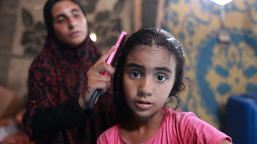
The prolonged conflict is also having an increasing impact on people’s mental health. The number of people experiencing anxiety, depression, post-traumatic stress disorder and suicidal thoughts continues to rise. Both adults and children are in urgent need of psychological support.

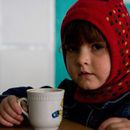
Photo: The mental health of people in Gaza is worsening
Children have recently begun a new school year. However, the formal education system in Gaza nearly no longer exists. Children are studying in temporary classrooms and are increasingly losing motivation and hope that their living conditions will improve. In June 2026, the UN Independent International Commission of Inquiry on the Occupied Palestinian Territory stated that Israeli authorities and security forces were deliberately targeting Palestinian children and were, according to the Commission, committing genocide and other serious crimes. Since the beginning of the conflict, more than 64,000 children have been killed or injured in Gaza.
The ceasefire must be respected
The ceasefire, which was intended to bring safety and stability to civilians, has so far failed to meet expectations or bring any immediate improvement.
Every human life has equal value. Violence against civilians is never justified, wherever it occurs. We call for the protection of civilians, respect for the ceasefire and unhindered humanitarian access for all those in need.
 Photo: The war in Gaza is robbing an entire generation of its childhood
Caritas Czech Republic in Gaza
Caritas Czech Republic has been supporting people in Gaza since 2023. Initially, our focus was on healthcare. We supported the operation of Caritas Jerusalem clinics, helping ensure access to healthcare for more than ten thousand people. We also helped equip a clinic run by the organisation Juzoor.
Today, we primarily focus on mental health support. A social worker based in the Gaza Strip provides individual psychosocial support to individuals and families. In addition to therapeutic sessions, she also helps connect people with material assistance through cooperation with other organisations.
We collaborate with the organisation Sawa, which operates a crisis helpline in Gaza and the West Bank. Between January and August this year, nearly 12,800 people used its services.
Your donations allow us to support people in Gaza. Thank you for caring about those affected by the conflict.