Ceasefire on paper
Although the ceasefire agreed in the autumn of last year led to a reduction in the number of attacks on the area by the Israeli military, at the beginning of August this year, UN experts warned of a sharp increase in violence against Palestinians in Gaza and the West Bank. In July alone, around 160 people were killed in the Gaza Strip. Since the ceasefire was declared, more than 1,200 people have died, including the previously mentioned 300 children. Nearly 4,000 residents have been injured. Since the beginning of the conflict in October 2023, more than 73,000 people have been killed.

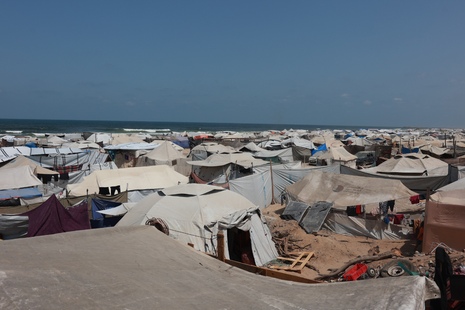
Photo: more than 1,200 people has died since the ceasefire was agreed
People have been living in unacceptable conditions for a long time. Most buildings have been damaged or destroyed, forcing entire families, often repeatedly, to relocate in search of a safe place in Gaza. However, even tent camps have come under attack. The constant danger, severe shortages of food and drinking water, limited access to basic services, and the loss of loved ones, homes, and livelihoods, coupled with little hope for a better future, have taken a heavy toll on the mental health of the local population.
Caritas helps on the ground
Sawa, an organisation that operates a crisis hotline in the area with support also from Caritas Czech Republic, reports that people are increasingly experiencing suicidal thoughts. This issue has been observed particularly among the most vulnerable groups of the population. According to the organisation, the number of cases in which callers report considering ending their lives increased significantly in the first months of this year compared with the previous year. For example, Sawa recorded 9 such cases in April 2025, compared with 113 in April 2026.
Residents of Palestine can access the hotline 24 hours a day, seven days a week. According to the organisation, this is particularly important because approximately half of callers experiencing suicidal thoughts contact the service between 7:00 p.m. and 9:00 a.m. Women account for the largest proportion of these cases, while the age group at risk is people aged 26 to 35. In 2026, the organisation has also observed an increase in calls from adolescents.
Photo: Operators of the crisis hotline
Hotline operators ensure that every caller has a safe space and emotional support. According to our colleague, who works directly in Gaza providing individual psychosocial support, local residents display remarkable inner strength. They support one another, and what also helps is the feeling that they are not facing their situation alone.
“Adults carry the burden of protecting their families while struggling with grief, anxiety, and uncertainty about the future. Children have grown up surrounded by explosions, displacement, and loss. Many no longer feel safe, even when there is no immediate danger,”
she explains in an interview. She also helps Gaza’s residents deal with practical challenges. For example, working together with partners, she arranged a wheelchair and medical shoes for a young girl named Rafah. However, she says that often the most valuable support is simply having someone willing to listen.
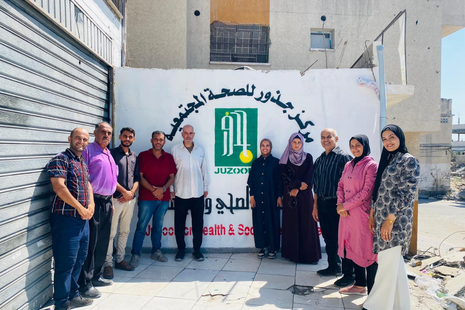
In the past, we were also active in the healthcare sector in Gaza, supporting clinics run by the organisations Juzoor and Caritas Jerusalem.
Humanitarian aid for Gaza
The Gaza Strip is one of the most dangerous places in the world for humanitarian workers. According to the UN, 350 humanitarians lost their lives in 2025; 186 of them were based in Gaza. This year, WHO has recorded 45 attacks on local healthcare infrastructure. Such incidents further complicate the work of healthcare providers and threaten the staff and the patients.
You can support the people of Gaza by contributing to the Caritas for Gaza fundraising campaign. Every donation makes a difference. Thank you.
Caritas for Gaza
Every month, selected highlights for you!
Sign up for our newsletter
and stay in the loop.
|



 Invisible crisis and incredible resilience. Caritas's social worker describes the life in Gaza