


May 25, 2026
News
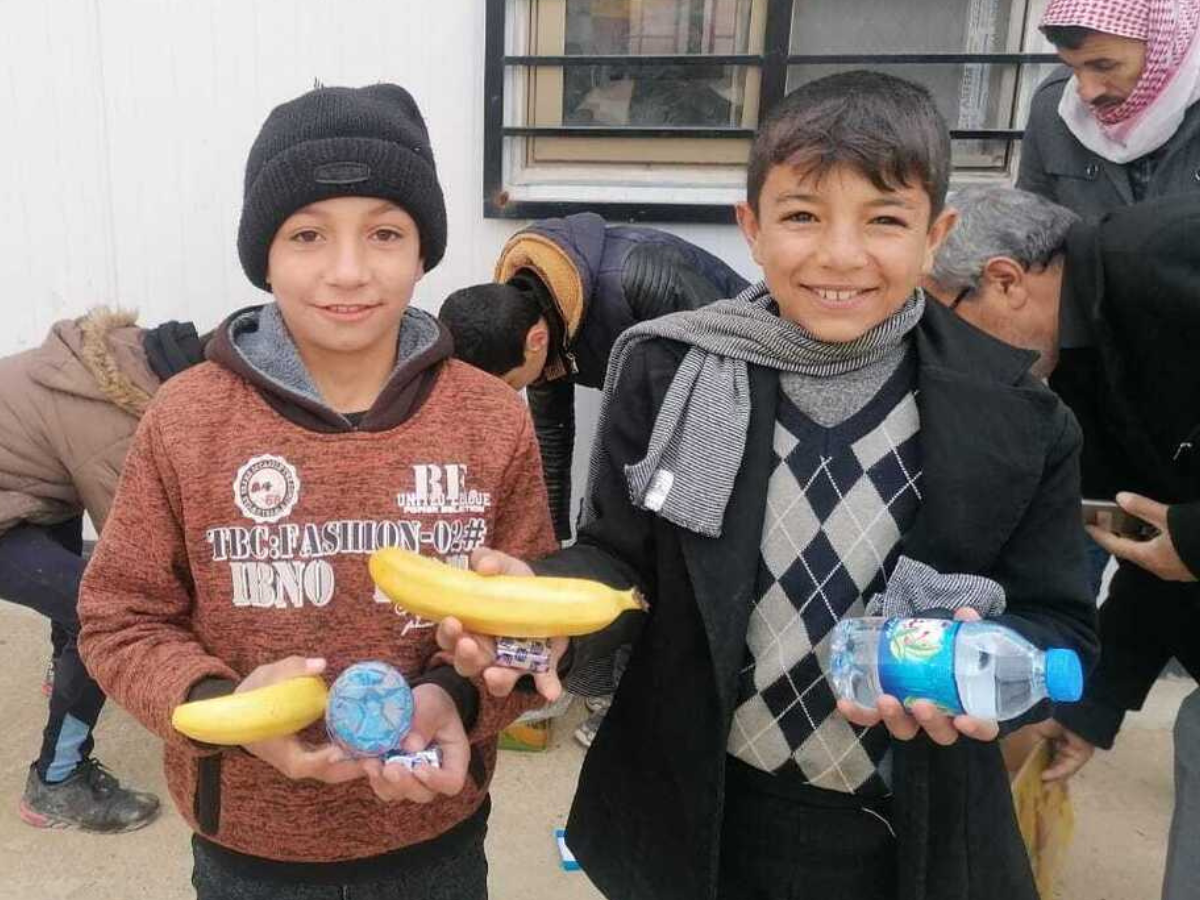
After more than ten years, Caritas Czech Republic completed its operations in Iraq. In this article, we would like to remember the milestones of our work in the country. At first, we provided only humanitarian assistance to local people. However, in 2017, we opened our own office there, and our support shifted to restoring livelihoods and infrastructure, which helped improve and sustain the quality of life for the people of Iraq.
1. Humanitarian aid
Caritas Czech Republic began its operations in Iraq in response to a local armed conflict in 2014, which led to massive displacement. In December of the same year, we supported our partner organisation, Caritas Iraq, with a one-off donation and by launching the Caritas for Iraq fundraising campaign, which aimed to offer immediate help to people who had lost their homes. The local Caritas provided refugees with financial support and vouchers so they could purchase winter clothes or bed linen. At the same time, it also became involved in the renovation of previously unused buildings to provide places to live.
In 2015, our work became more systematic. In collaboration with a partner organisation, Un Ponte Per, we assisted internally displaced families. We provided them with medical care, food and other essentials, household necessities, hygiene items, and school supplies for children.
A crucial moment was the establishment of our own office in Iraq in 2017. Together with partner organisations, we continued to focus on food security and health support for the most vulnerable displaced persons in Mosul. At the beginning of July that year, the city was liberated from the control of radicals from the self-proclaimed Islamic State. We therefore sought to stabilise the local situation by distributing humanitarian aid.
2. Restoring of livelihoods and infrastructure
In March 2020, we began helping returnees in northern Iraq restore their livelihoods. Specifically, we operated in both the urban and rural areas of the Nineveh Governorate. After returning home, local people faced an unstable economic situation, exacerbated by the Covid-19 pandemic. Caritas Czech Republic assisted selected vulnerable families. We organised business skills training for them and provided small grants to help kick-start their livelihoods.
A year later, we received what was, at the time, our largest-ever financial support, amounting to 5.4 million USD from UNDP – the UN Development Programme. This sum was a record not only for us but also for the entire European Caritas network. The funds were used to create new job opportunities and to restore infrastructure in the Hīt region, which stretches along the Euphrates River. As a result, beneficiaries gained employment while also contributing to the reconstruction of local infrastructure. They first underwent training focused on work rehabilitation. Afterwards, they received certificates, which also improved their chances of finding future employment. They then took part in activities such as cleaning, repairing electrical networks, and restoring key roads.
We helped, for instance, Salwa, who had not finished school. Her husband was able to provide for the whole family and continue working after returning home, but their situation was later complicated by the Covid-19 pandemic.
I was a shy woman. I have learnt life skills that will help me develop and improve myself. And I was determined that I could work outside the home,
Salwa says and adds: “This opportunity helped me become a more courageous lady.”
 Foto: Salwa
During its time in Iraq, Caritas also assisted a young mother, Kefaya, who was trained in digital marketing so she could start her business from home. We helped Valentina, who was a painter, and Nassim, who opened his own workshop. We also provided Martin with training and a grant to support the development of his clothing shop. At just twenty-three years old, Martin was the sole breadwinner for his large family, as his father and two brothers lived with disabilities and were unable to work. We also provided Martin with training and a grant to support the development of his clothing shop. At just twenty-three years old, Martin was the sole breadwinner for his large family, as his father and two brothers lived with disabilities and were unable to work.

Foto: Martin
3. Support of agriculture
We also supported local farmers in restoring their livelihoods. We provided dozens of families with large-capacity greenhouses, seeds, and tools. Labib was given the opportunity to use one of the newly built large-scale greenhouses; he also participated in our training and was able to restart his business.
The trainings were very informative. I am glad I was able to learn so much, but even more important for me was the opportunity to share my own experience with others,
Labib explained. We provided similar assistance to Azad, whose home and fields had been burned down by the Islamic State.
At the same time, we repaired a three-kilometre-long irrigation canal in the Hīt district in central Iraq. Due to sediment build-up and cracks, local farmers had been unable to make full use of it. Thanks to our assistance, it started functioning properly again, which benefited crop yields and, subsequently, farmers’ harvests and incomes.
4. Housing assistance for displaced families
In Dahuk, we distributed materials to build temporary shelters for displaced people, and we also helped selected families repair their provisional shelters. In addition, we covered rent for 50 local families for six months. Furthermore, we provided direct financial assistance to 175 families in the Sumel and Zakho areas so they could purchase materials for essential repairs themselves.
With our support, Rashid was able to build provisional housing, for example. He was caring for his wife and daughter with disabilities. “Our financial situation has been very critical. I tried to improve my situation as a daily worker and by finding a place to build our shelter. I bought the necessary materials to have a roof over our heads,” said Rashid, adding:
As a family of nine, thanks to Caritas, now I have another room to share with my big family.
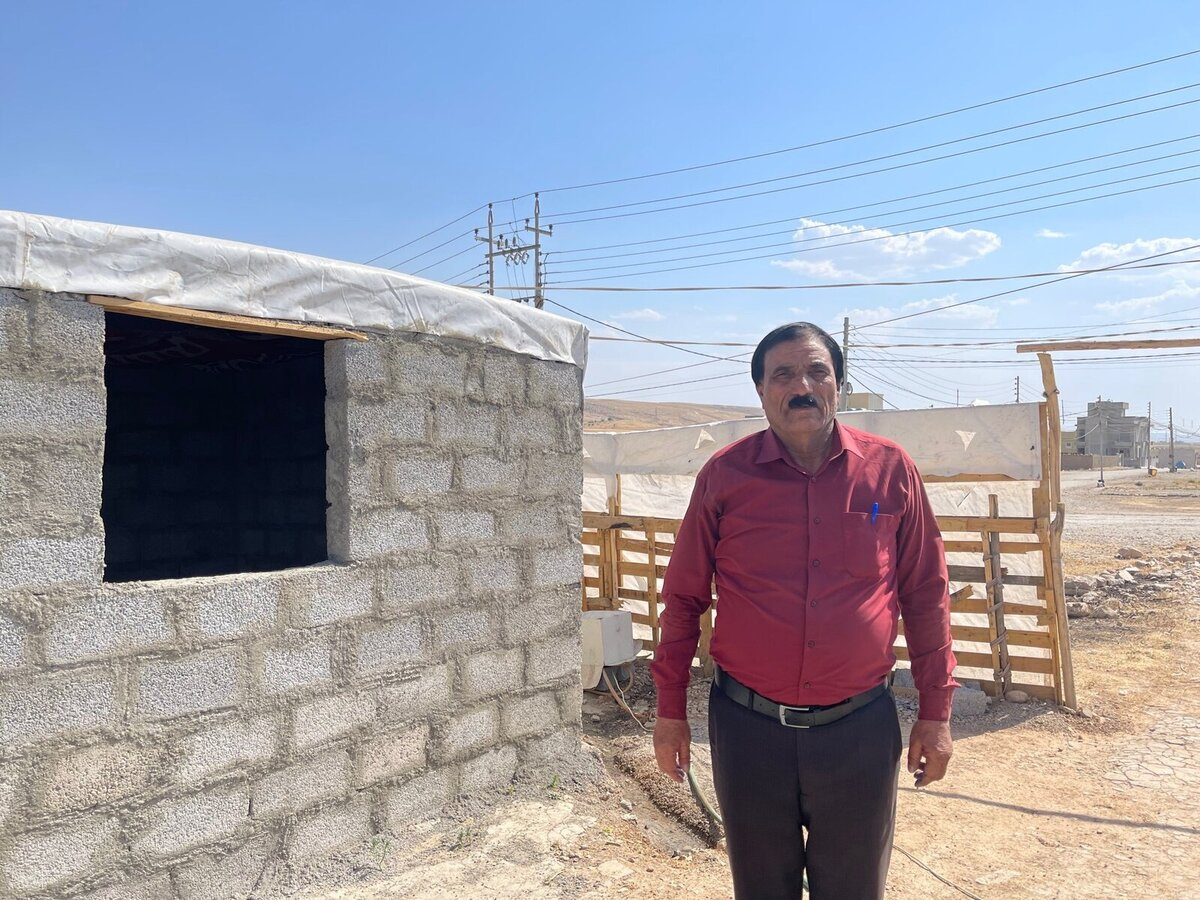
Foto: Rashid
5. School feeding support
Returnees often could not afford to send their children to school. Therefore, in the Kirkuk area in northern Iraq, we provided free meals to more than 10,000 children from low-income families across 60 schools. In the following year, this support expanded to reach thousands more families and dozens of additional schools. The activity was implemented in cooperation with the World Food Programme and the Iraqi government.
As a result, we were able to increase school attendance while also improving children’s health and academic performance. The number of children who had to work decreased as well. Education also strengthened their prospects for future employment. For girls, it meant a reduced risk of being married off by their parents at a very young age.
6. Healthcare support
In 2019, in cooperation with the Iraqi public administration, we contributed to the restoration of a hospital in the city of Al-Qa’im that had been burned down during the fighting with the Islamic State. We conducted a damage assessment, supplied necessary medical equipment, and organised training for local staff. We also supported the repair of facilities in other hospitals in the Nineveh governorate.
7. Restoring access to drinking water
Iraq faced a shortage of drinking water due to both geographical conditions and the war with the Islamic State. During the conflict, some water filtration facilities were damaged, causing people to lose access to safe drinking water. Caritas Czech Republic therefore operated 17 water treatment facilities in the Anbar region. The upgrades included newly renovated sedimentation tanks and filters. As a result, people were once again able to use water without concerns for their health.