Diagnosis and treatment
Family doctors are often the first healthcare professionals that patients turn to. Many people seek help only for physical symptoms, unaware that underlying issues may be contributing to their condition. For this reason, it is crucial to strengthen doctors’ skills so that they can identify symptoms early, assess their severity, provide initial treatment, and refer patients to a specialist when necessary.
Local expert Nato Shengelia explains that although general practitioners previously suspected that some of their patients were experiencing mental health problems, they often did not know how to proceed: “The biggest problem was: What should I do next?”
Training and teleconsultations
Doctors received practical tools and clinical guidelines to support both diagnosis and follow-up care. In addition to formal training, they benefited from online supervision and direct support from specialists within their practices.
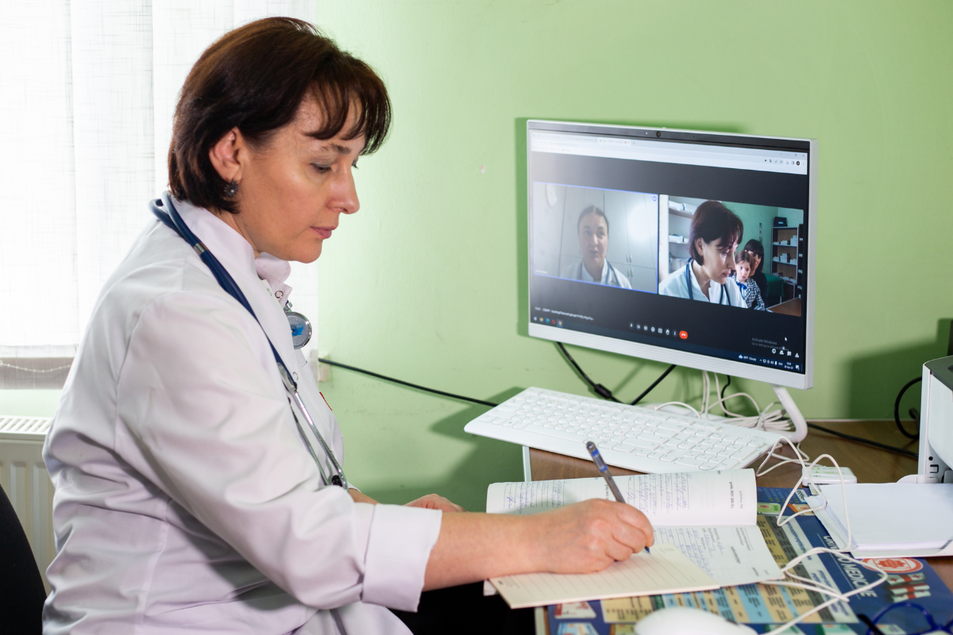
Photo: Family doctors receive knowledge through teleconsultations
Through teleconsultations, doctors were able to connect with mental health specialists, discuss specific patient cases, and seek guidance on issues that were unclear to them, such as how quickly a patient should be referred for specialist care. Thanks to these twice-monthly sessions, general practitioners are now able to work more systematically and confidently.
I believe that one of the most important outcomes of the teleconsultations was the beginning of the creation of a professional support network,
explains Nato Shengelia.
Timely and professional care
Thanks to clinical guidelines, general practitioners can now assess and manage mild to moderate symptoms of depression and anxiety, problematic alcohol use, and certain stress-related conditions. Their role does not end when a patient is referred to a specialist. They continue to monitor treatment progress and help coordinate ongoing care.
According to the expert, primary healthcare and specialised mental health services complement one another. Patients can access professional support from their family doctors at an early stage, while high-risk or complex cases also receive the attention they need. As Nato Shengelia adds:
The ultimate goal is not more referrals, but the right referrals — for the right patient, at the right time, to the appropriate specialist. This is what creates a continuous and safe chain of care for the patient.
The programme also includes clinical audits, which make it possible to assess how newly acquired knowledge is being applied in practice and to identify areas requiring additional support.

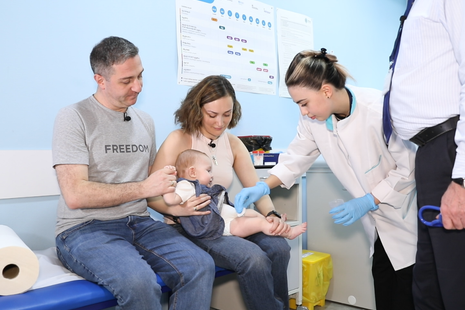
Photo: Primary healthcare complements specialised mental health services
Caritas Czech Republic in Georgia
We support the integration of mental health care into Georgia’s primary healthcare system through the project Strengthening Human Capital Development in Georgia, implemented by Expertise France with the support of the European Union and the French Development Agency.
In Georgia, we have worked in the area of healthcare for many years. We also support cancer prevention by improving the quality and accessibility of screening centres and raising awareness of early detection and prevention. In addition, we focus on the treatment of childhood cancers.
We are also involved in mental health support in Ukraine, where, thanks to the Caritas for Ukraine fundraising campaign, we are currently reconstructing a Mental Health Centre for children and youths in Lviv. In Gaza, we provide individual psychosocial support and help sustain the operation of a crisis helpline.
Thank you for supporting our activities abroad!
Every month, selected highlights for you!
Sign up for our newsletter
and stay in the loop.
|



 Trust is behind the success of Czech development cooperation, says country programme coordinator Filip Tlapa