
Caritas for Gaza
Help civilians survive this humanitarian crisis

Caritas for Gaza

Personal data

Do you want a donation receipt?

Birthdate

Recapitulation

Thank you for your decision to donate to the Caritas for Gaza project.

More information

Payment methods: Visa, Visa Electron, Mastercard, Maestro, Google pay, Bank transfer and QR payment


People in the Gaza Strip continue to face a catastrophic humanitarian situation.
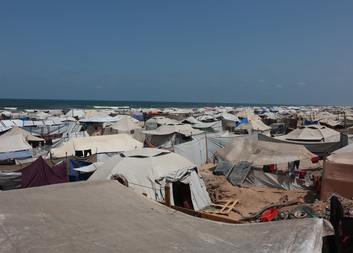
Despite a ceasefire being in place, basic necessities remain scarce, and hundreds of thousands of people are living in makeshiftconditions without regular access to food, medicines or electricity. The long‑running conflict has had a devastating impact on civilians, and its consequences will be felt for decades to come. People needunrestricted access to humanitarian assistance, including healthcare.

Caritas Czech Republic continues to support those most in need in the Gaza Strip. The continuation of our activities is made possible by the Caritas for Gaza fundraising campaign. 

Why donate now

  • Despite the war, around 2 million people still live in Gaza
  • During the conflict, 1.9 million people have been displaced
  • Two-thirds of the population are living in camps in makeshift conditions 
  • 92% of residential buildings have been damaged or destroyed
  • Healthcare facilities are operating only to a limited extent
  • Deliveries of humanitarian aid remain insufficient and unstable. 


In Gaza, suffering is everywhere but so is resilience. Through Caritas Czech Republic, we help people reclaim their dignity, one step at a time. Locals now recognize Czechia not just by name, but by the healing it brings. Your support means hope in the darkest of days.

Ola, Case Management Coordinator of Caritas Czech Republic

What your donation enables

 

Psychological support

 individual social support

24/7 crisis hotline


How Caritas Czech Republic helps

We are one of the few Czech organisations that has its own team in Gaza, which continues to provide assistance to people on the ground. We have long‑term cooperation with the Palestinian organisation Sawa. In 2025, we also worked with Caritas Jerusalem and the organisation Juzoor to provide basic healthcare. We are currently focusing on: 

  • Individual social and psychological support (case social work)
  • Crisis telephone intervention
  • Provision of basic living needs (such as accommodation and access to healthcare) 

Helping with us

Sawa


News

Fleeing within their own country – how Caritas supports refugees
June 15, 2026 News

Fleeing within their own country – how Caritas supports refugees

According to the World Health Organisation, 117.3 million people have been forcibly displaced from their homes. However, displacement takes many forms – 36.4 million have sought safety across borders, while 8.4 million are already abroad applying for asylum. In this article, on the occasion of World Refugee Day, which is commemorated annually on June 20, we take a look at displacement from several perspectives, showing the diverse stories behind the term and how Caritas Czech Republic’s international aid responds to them.

Conflicts out of the spotlight: 6 crises we tend to forget about in 2026
June 4, 2026 News

Conflicts out of the spotlight: 6 crises we tend to forget about in 2026

Armed conflicts, ceasefires during which civilians continue to die, and drone attacks in previously safe areas. At the moment, there are more active conflicts than at any time since the end of World War II. Half of those conflicts are taking place in Africa. Their consequences do not affect only the participating states, their residents or neighbouring countries; they impact the whole world, our economy, environment and peace of mind. But what crises and conflicts stay out of the media spotlight? We bring you six examples in this article.

Testimony from Gaza: Increasing numbers of rodents are threatening the health of local people, says a doctor in an interview for Caritas Internationalis
May 19, 2026 News

Testimony from Gaza: Increasing numbers of rodents are threatening the health of local people, says a doctor in an interview for Caritas Internationalis

Amid the ongoing humanitarian catastrophe in the Gaza Strip, a new devastating public health emergency is breaking: a massive rodent infestation that is spreading diseases. According to the World Health Organisation (WHO), more than 70,000 cases of ectoparasite infections and rodent -borne illness have been reported in Gaza since the start of 2026 alone. We publish the following Interview with one of Caritas Jerusalem’s staff working on the ground in Gaza, the doctor wishes to remain anonymous for security reasons.

Ceasefire is not enough: War continues to threaten civilians, not only in Lebanon
April 27, 2026 News

Ceasefire is not enough: War continues to threaten civilians, not only in Lebanon

A regional conflict that began at the end of February 2026 with an attack on Iran and soon spread to other countries has not stopped despite the announced ceasefire. The situation remains uncertain. In Lebanon, political leaders have advised internally displaced persons not to return home, which represents an opposite approach to the one they took during the conflict in 2024. In the country, almost one-fifth of the population has been forced to leave their homes, and more than one million people remain displaced. Caritas Czech Republic supports them through cooperation with Caritas Lebanon. 

Story from Gaza: She was dependent on help from her family. Now, she dreams of walking on her own
April 22, 2026 News

Story from Gaza: She was dependent on help from her family. Now, she dreams of walking on her own

As a little girl, Rafah learned what it felt like not to have her own freedom. She was born with cerebral palsy and a foot disability. As a result, she was unable to move without her family’s help. Her mother had to carry her everywhere, and Rafah could not play with her peers. With the beginning of the war in Gaza, her family was displaced to a refugee centre, where she received support from Caritas Czech Republic. Our social worker provided her with psychosocial assistance and arranged for her to receive a wheelchair, so she could become more independent. This story, with a happy ending, is about a girl who did not lose her brave spirit despite war or health difficulties.